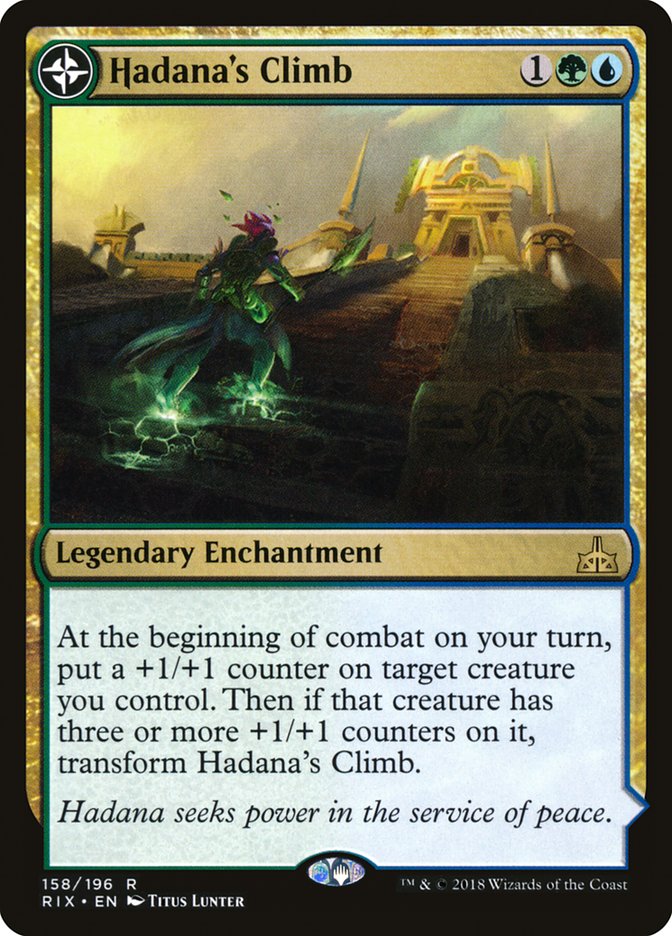
Rielle’s Top 40 Hit

June 22, 2020

one hit wonder – noun : a performer, group, etc., that is popular or successful only once for a brief time

For the first time since starting this blog, a week (in the “Sunday-Saturday” sense, not “7 days” sense) went by without me posting. Not that anyone was likely missing my content, but I’m still saddened I didn’t put this up at the end of last week. I’d wanted to leave the previous post for at least a week, however, since I felt it’s message was far more important than anything I’ve previously posted.

What follows was what I’d planned to post the week of the 8th. I’m aware that the impending Arena release of M21 on Thursday means the deck I’m going to discuss isn’t particularly relevant, as it contains none of the new hotness about to drop. I still think it’s a hoot to pilot, though. And the write-up took quite a long time to write, and I’d hate to see the effort go to waste. Without further ramblingocity, I present Rielle’s Top 40 Hit.


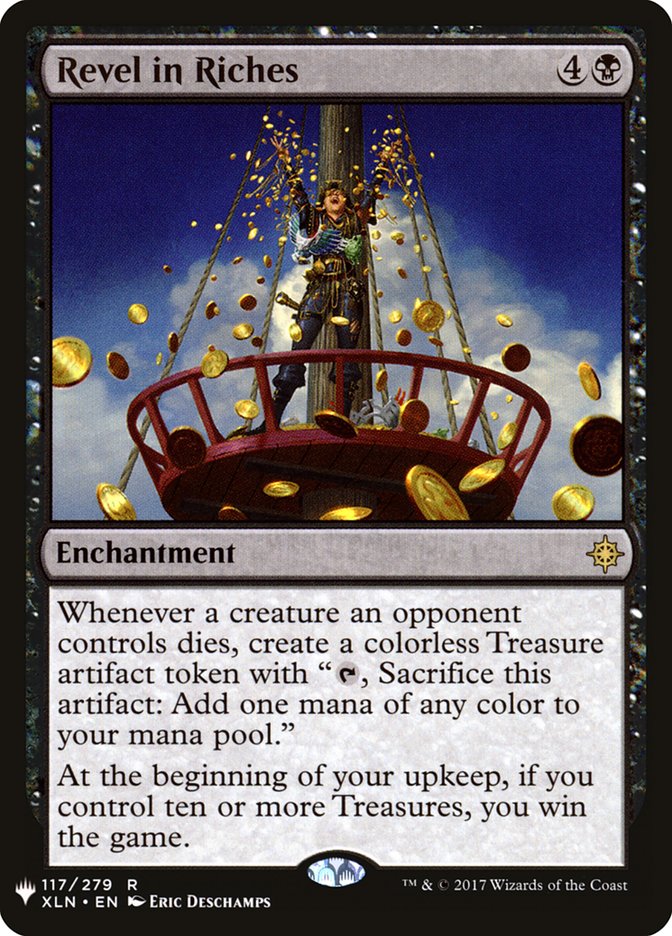
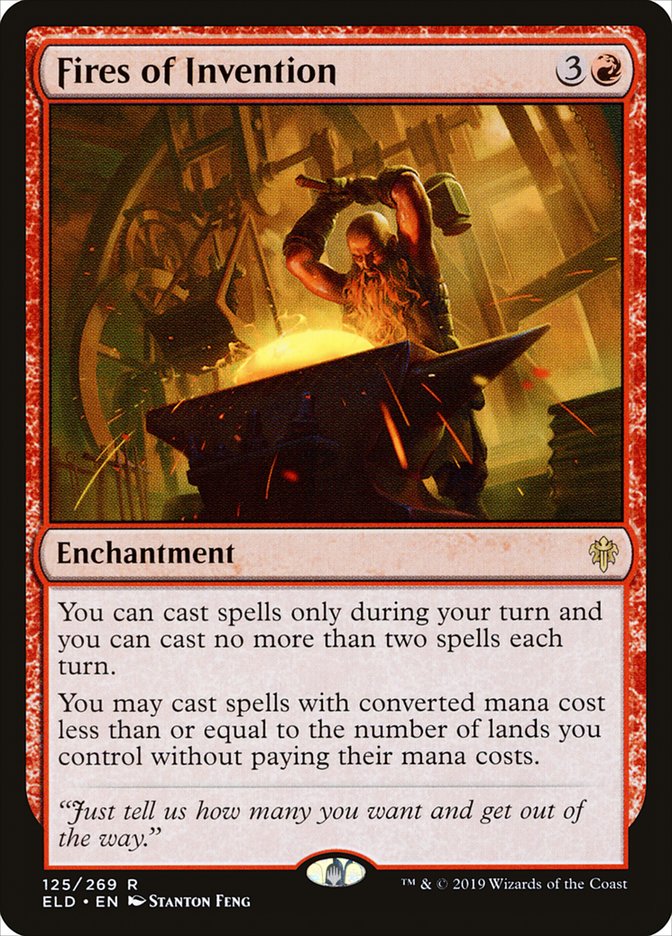
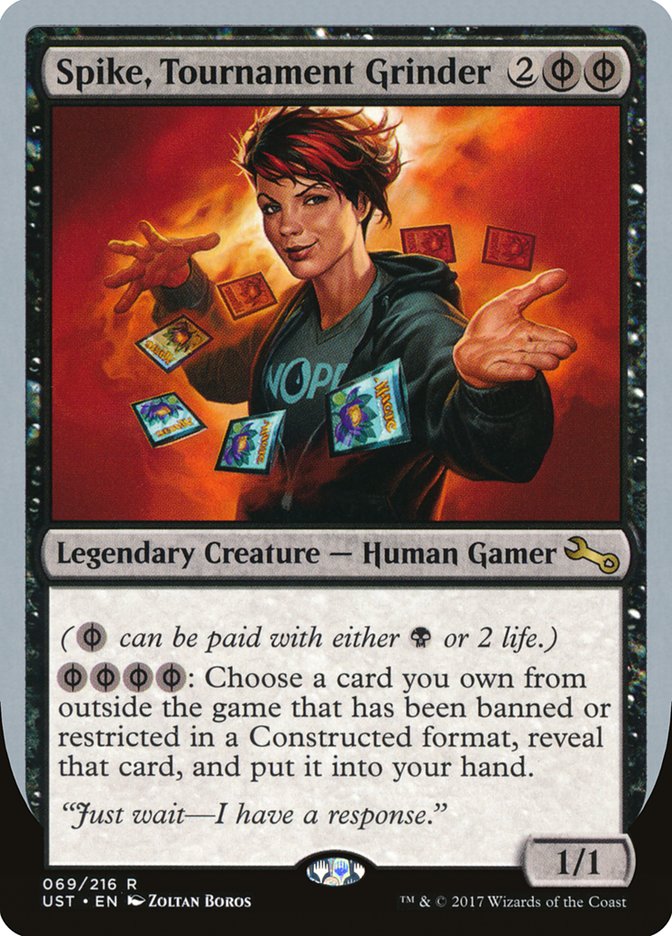
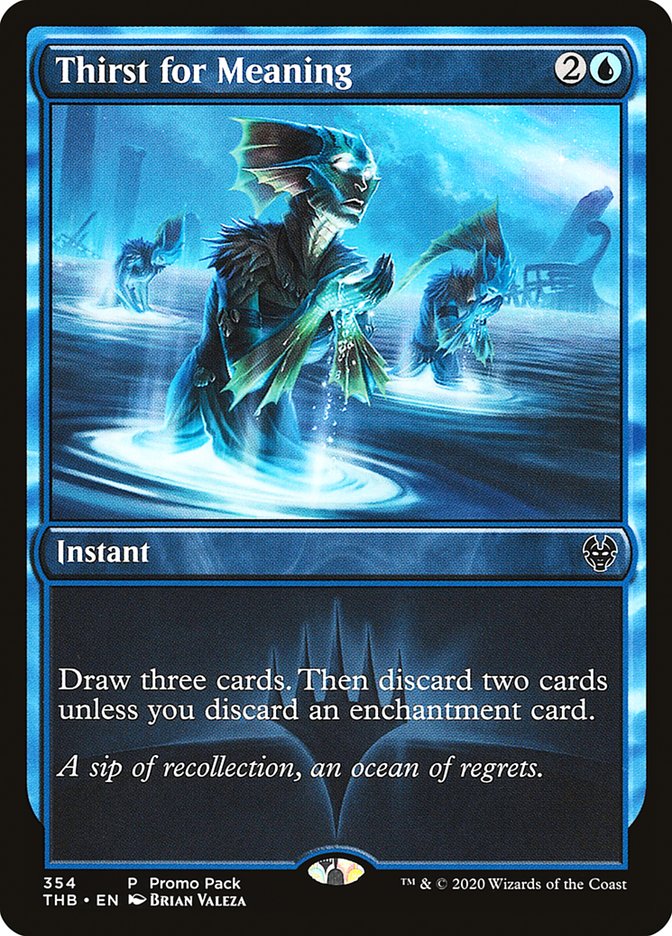
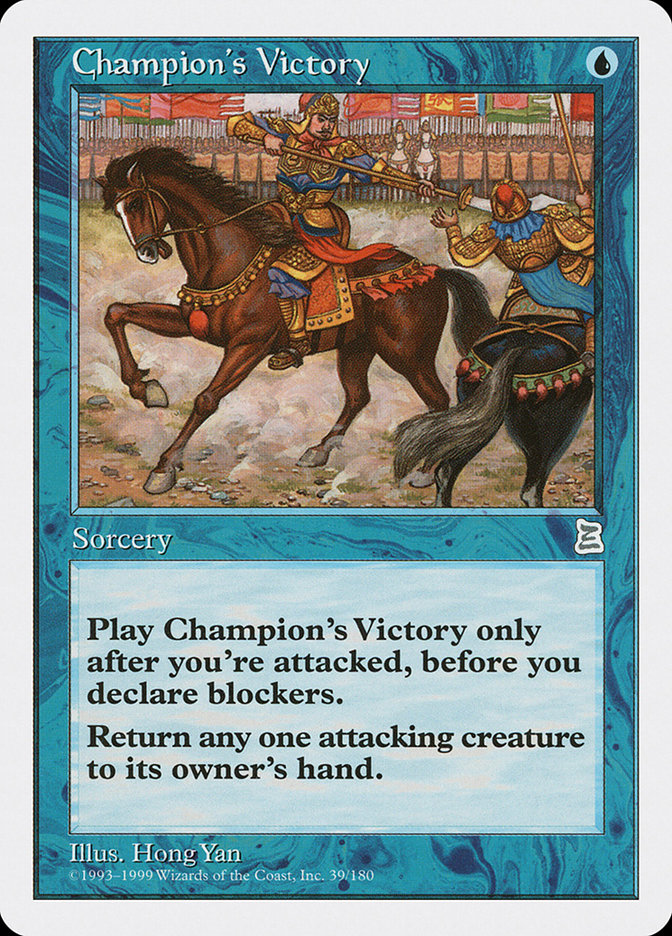
Ah, build-around enchantments. Quite a number have been printed in the past year or so, none more infamous than the now-blessedly-banned Fires of Invention.
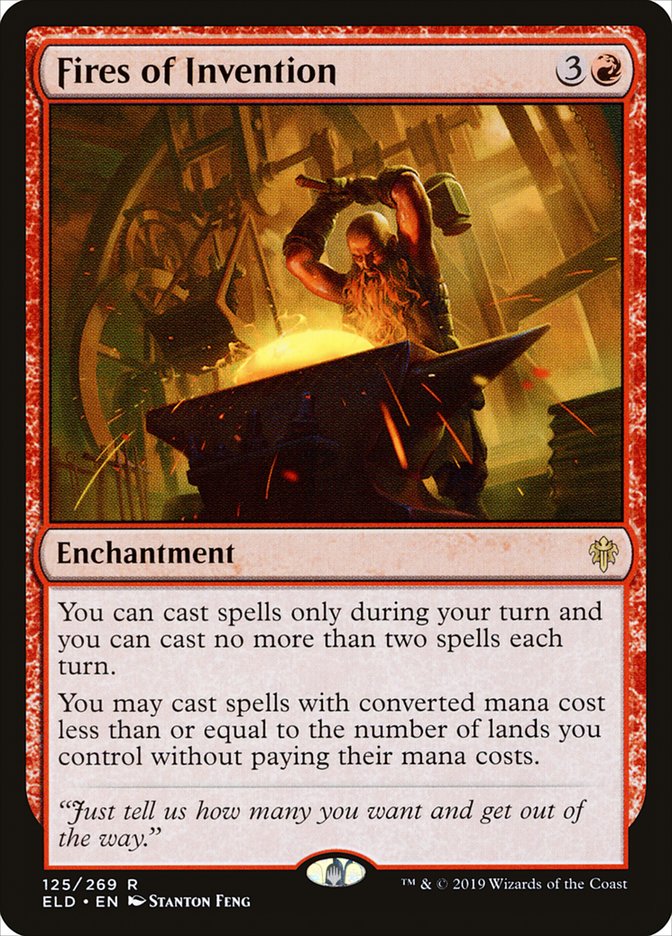
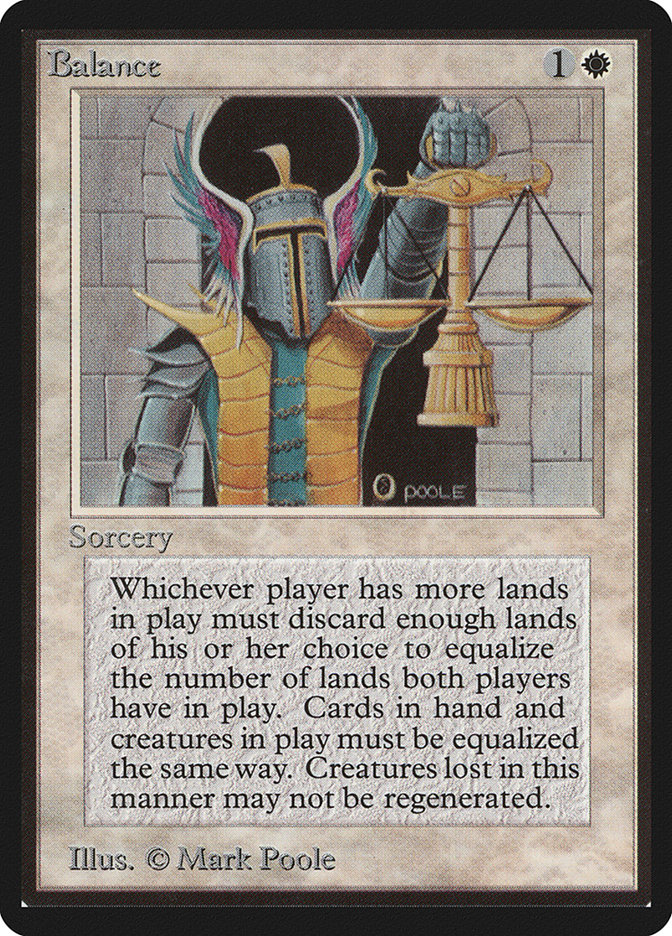
If you miss this thing…you may be an awful person.

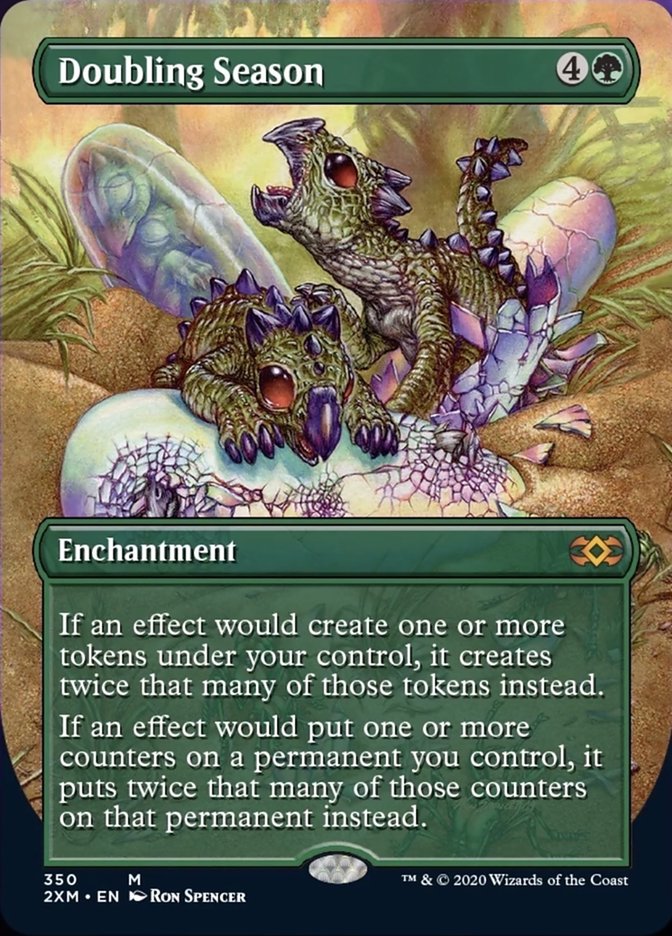
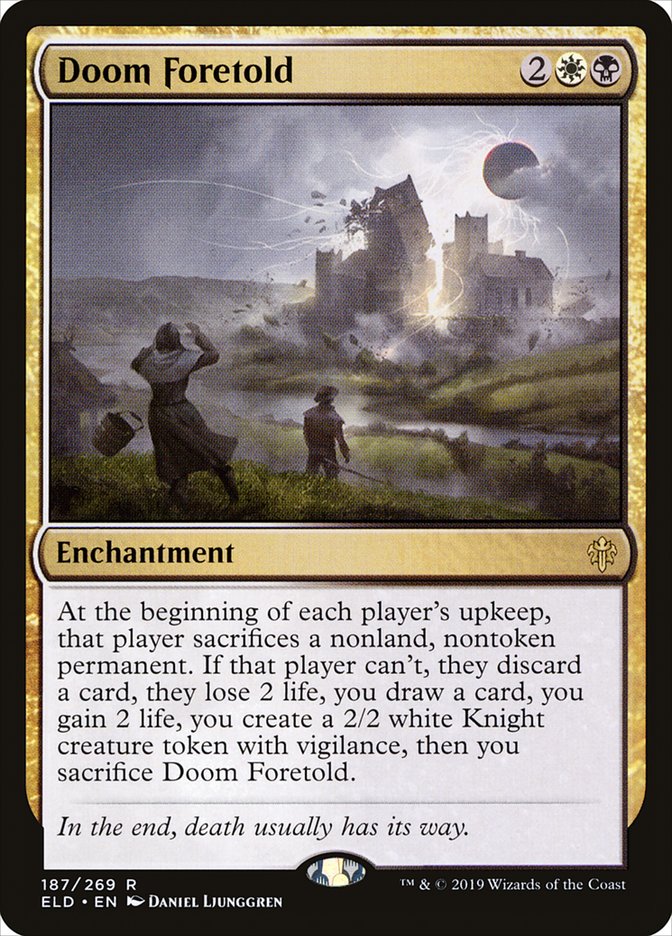
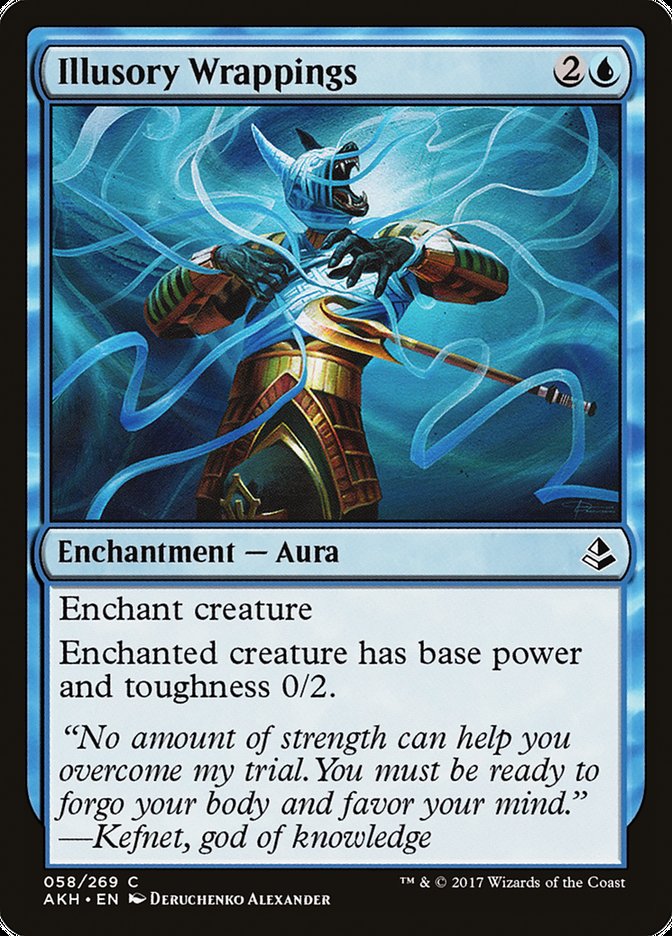
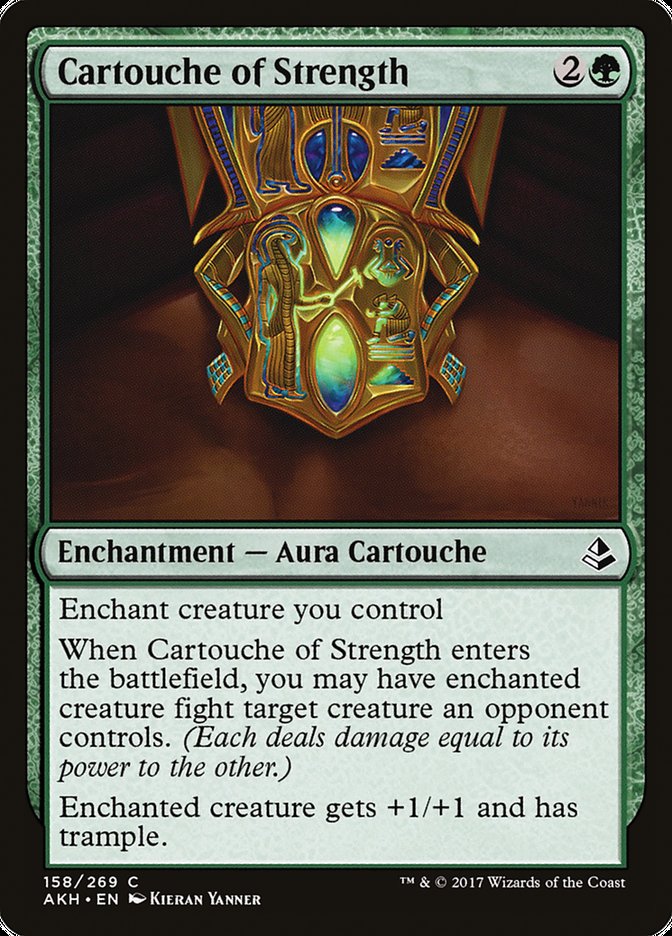
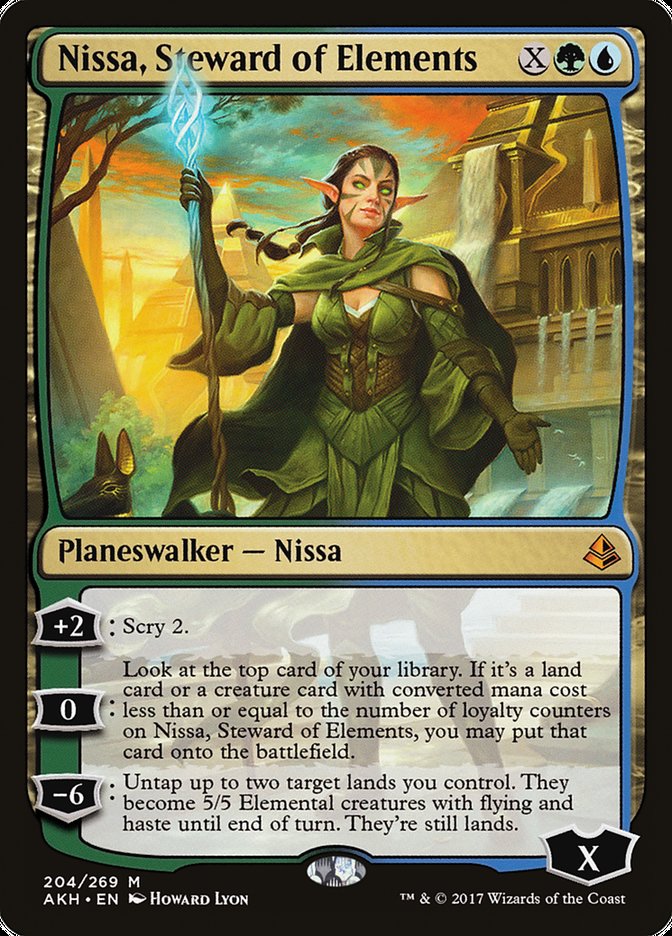
It’s the gold enchantments that capture my heart, though. Doom Foretold coaxed me over to the dark side after the release of ELD, and more recently I made it a central pillar of my Mardoom deck. Betwixt those creations, Enigmatic Incarnation called to me and settled in a Bant enchantment-based deck I played heavily for a bit.

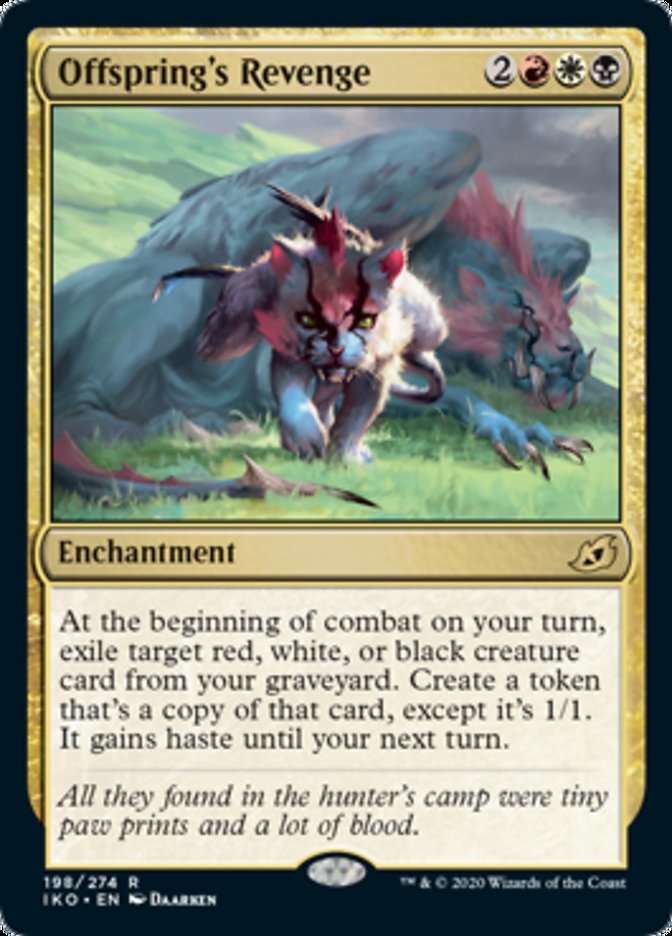
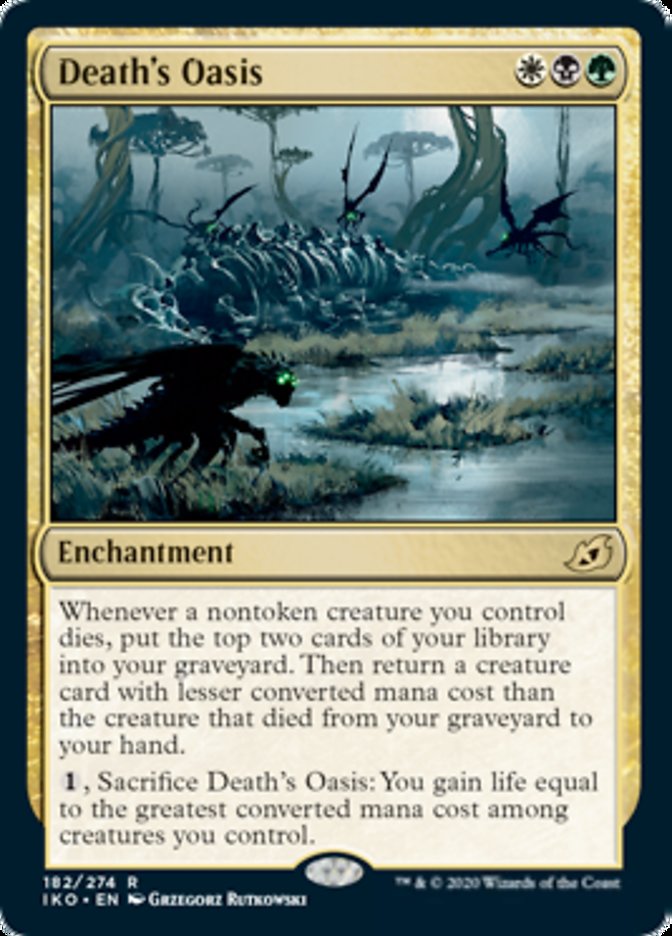
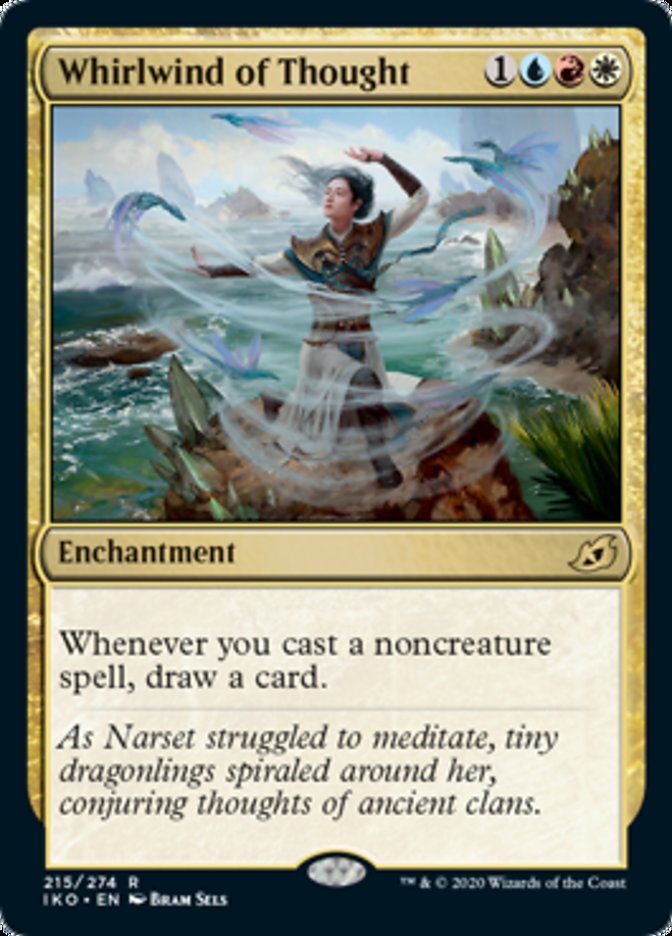
Ikoiria: Lair of Behemoths brought five new options to tinker with – one for each color wedge: Death’s Oasis, Offspring’s Revenge, Song of Creation, Titans’ Nest, and Whirlwind of Thought. All feel brimming with potential, and it would not surprise me if I spend an abundance of time trying to make each of them purr.

Offspring’s Revenge was the only logical place to start, being in the same colors as my existing favorite deck. After three different builds, I abandoned what felt like a fool’s errand. I strongly suspect I’ll come back to the card, but my initial models felt clunky and feeble. I was convinced the card’s CMC of 5 was the true death-knell. It was just too slow. And let the record show – I have played against an opponent sporting Offspring’s Revenge only once – and the card didn’t seem to work particularly well for them.
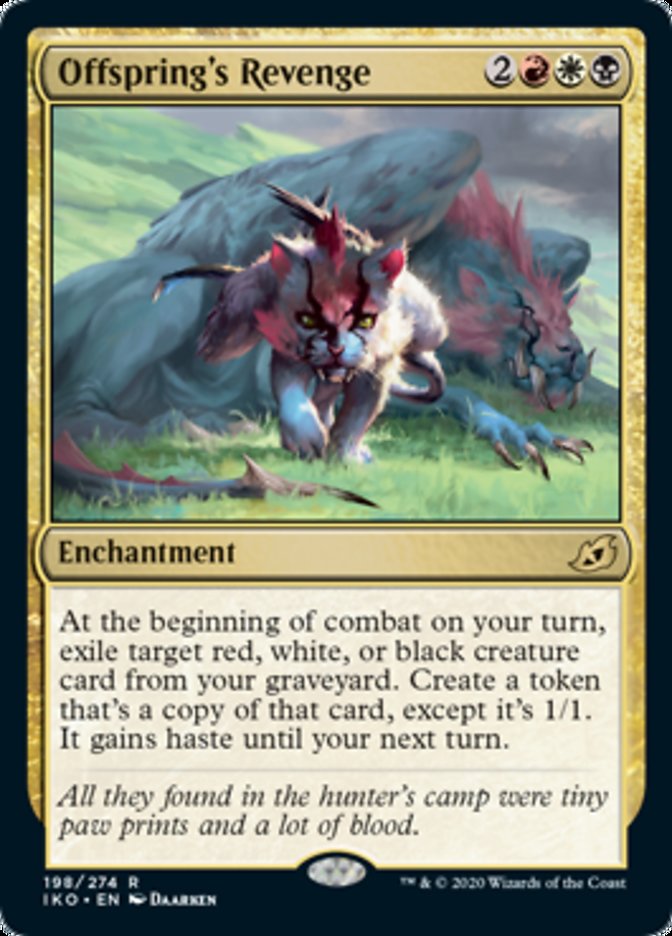
Untapped potential, or true junk rare? I’m leaning towards the latter.

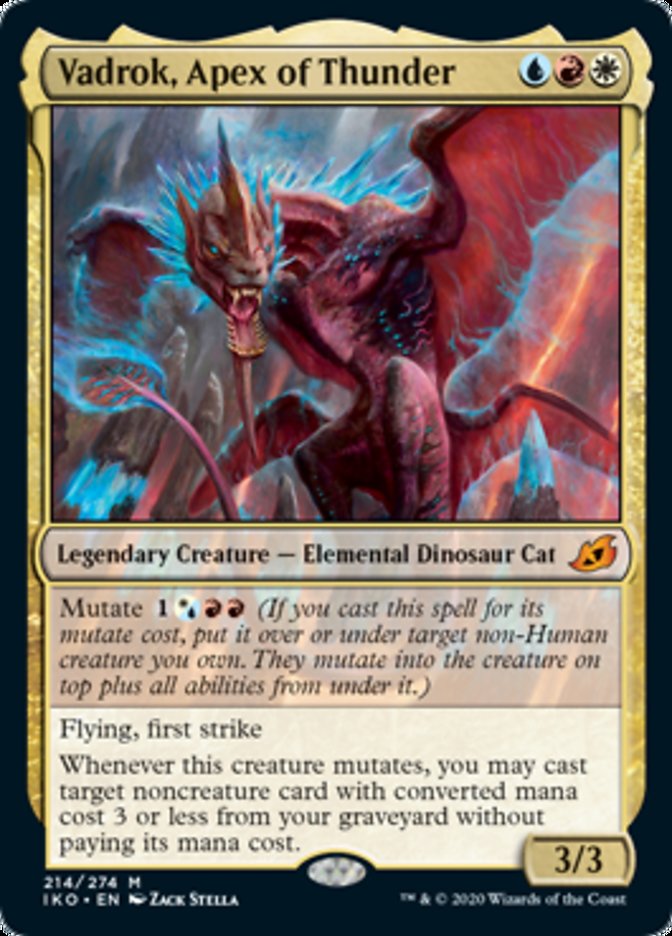
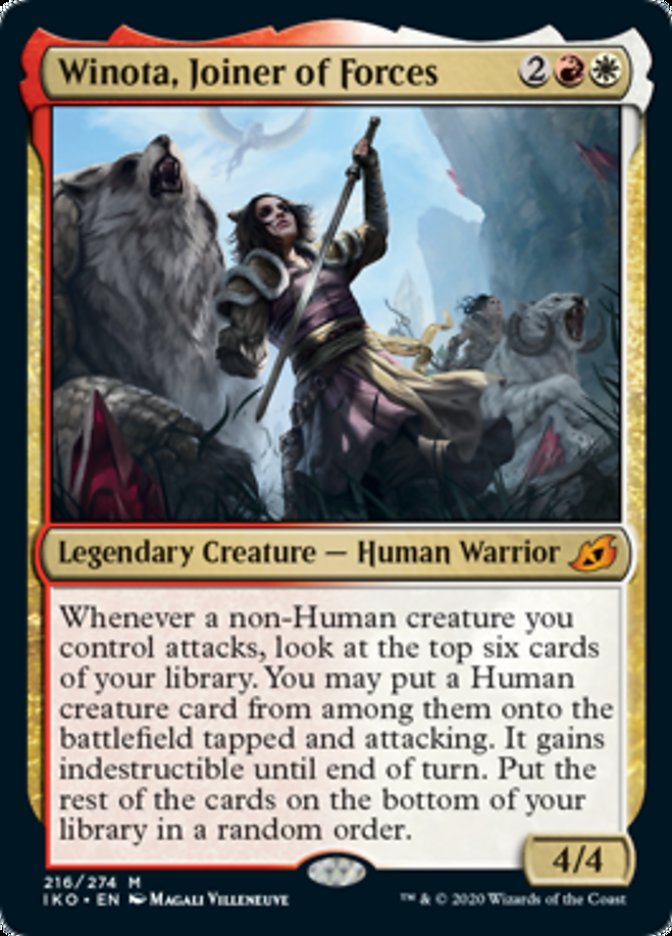
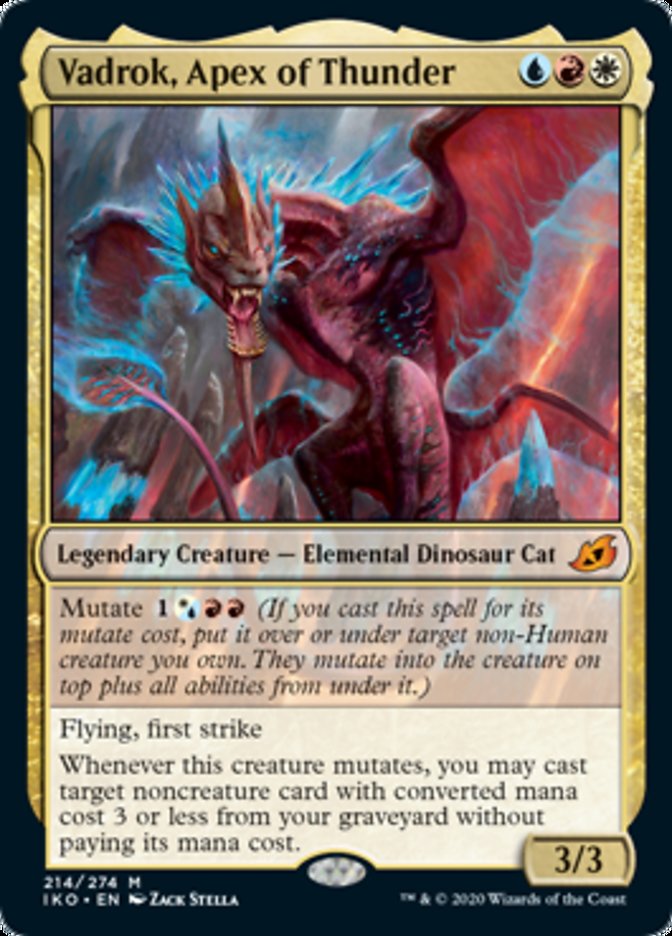
Whirlwind of Thought piqued my curiosity next, as I’d already made a “spells matter” deck with Kykar, Wind’s Fury and Vadrok, Apex of Thunder that I thought it might fit in. Honestly, though…I never actually put the card in the deck. Whirlwind of Thought is just…dull. It’s arguably NOT want you want to be doing with 4 mana in a “spells matter” deck, and while it might be efficient if you can untap with it, or somehow play it with mana to spare, it doesn’t do anything except draw you cards. You like drawing cards, I like drawing cards, but in and of itself, that’s not particularly creative or interesting. I recall seeing an opponent play this card once. I blew it up before they untapped. I have no idea if this thing is worth building around.
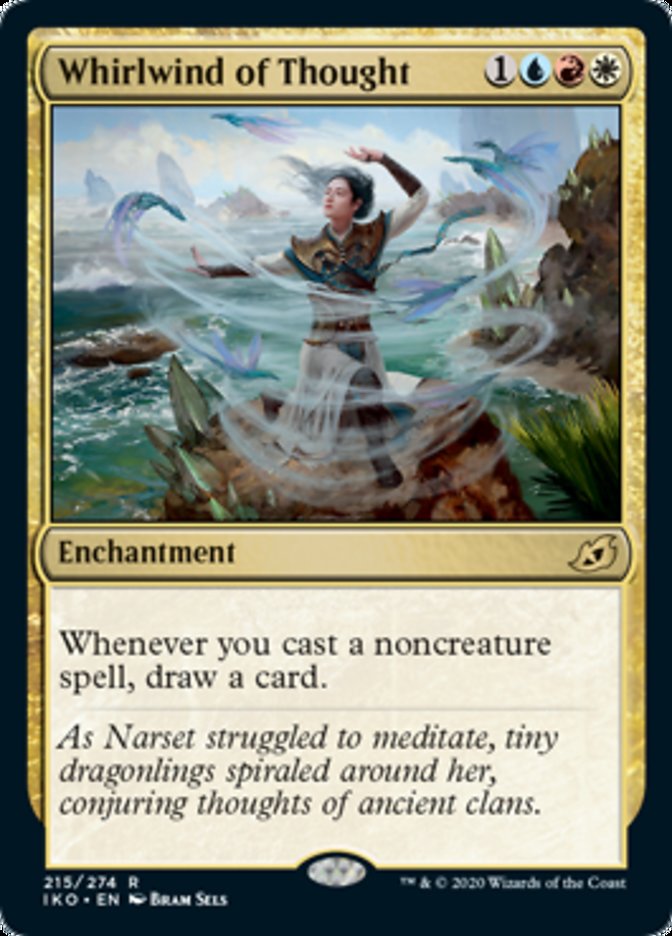
As value engines go…*yawn*

Death’s Oasis and Titans’ Nest are total unknowns to me – I’ve yet to investigate either, and I’ve never seen either hit the battlefield. Mayhaps I’ll go looking for builds. Neither appeal to me on any fundamental level, however.
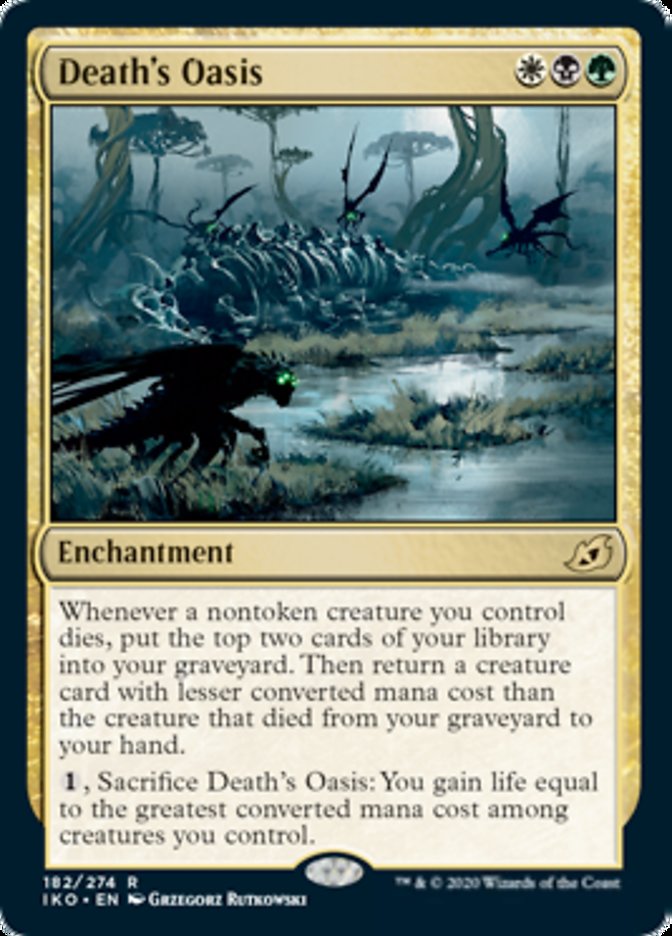
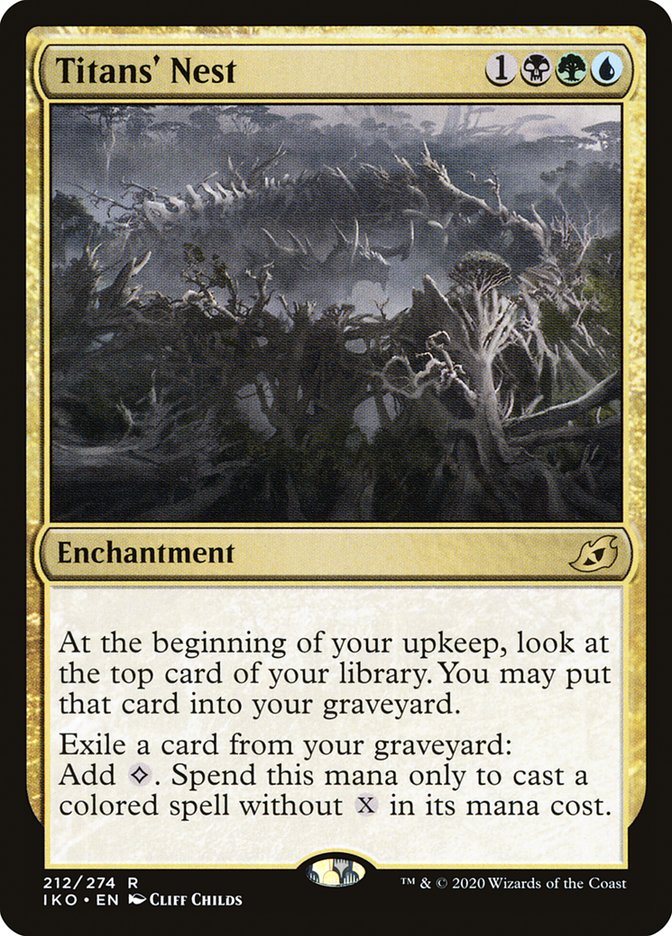
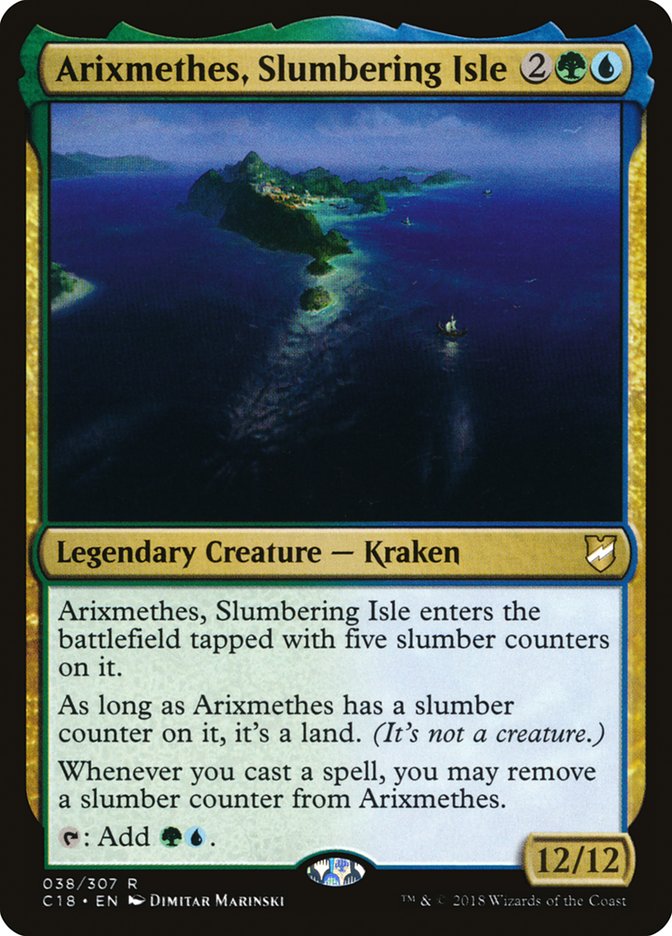
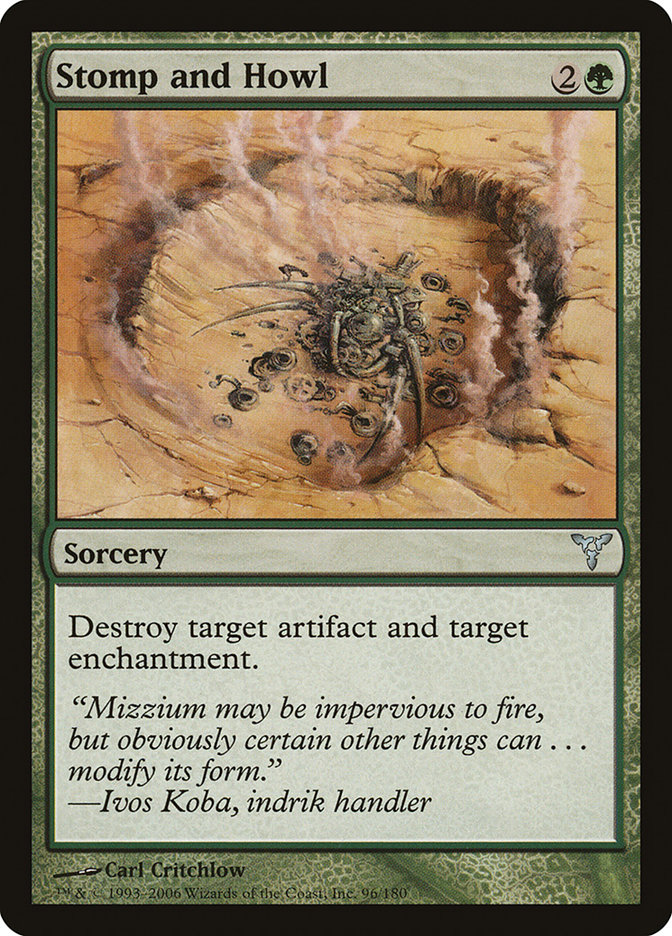
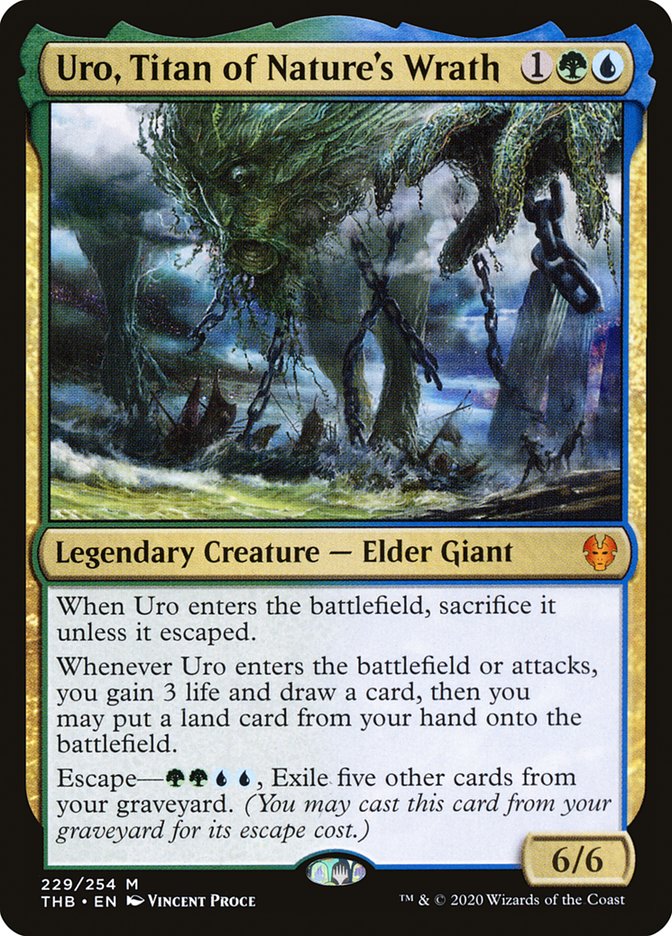
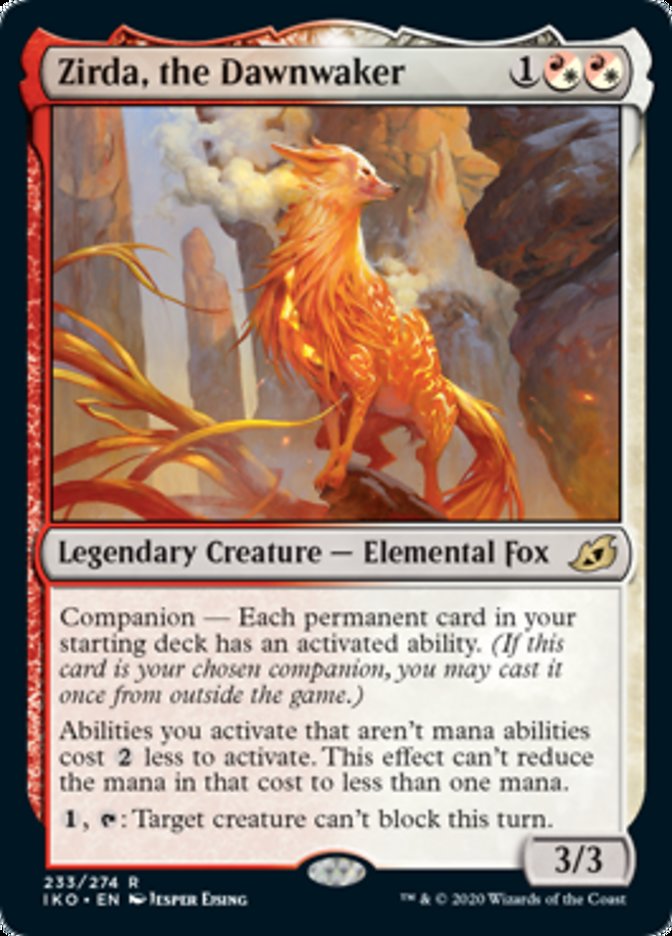
To be fair, the card that I’m now smitten with – Song of Creation – didn’t immediately appeal either. The Temur color combination – blue/red/green – conjures naught but bad memories of Risen Reef and bonkers elemental decks that flattened me repeatedly not long after Core 2020 was released a year ago. I purposely ignored Song of Creation for that reason alone.

But Magic often finds ways of surprising you. Be it from a wild bludgeoning or a subtle caress, aspects of the game leave their marks upon you, and you are changed. So it was with my new favorite deck – Rielle’s Top 40 Hit.
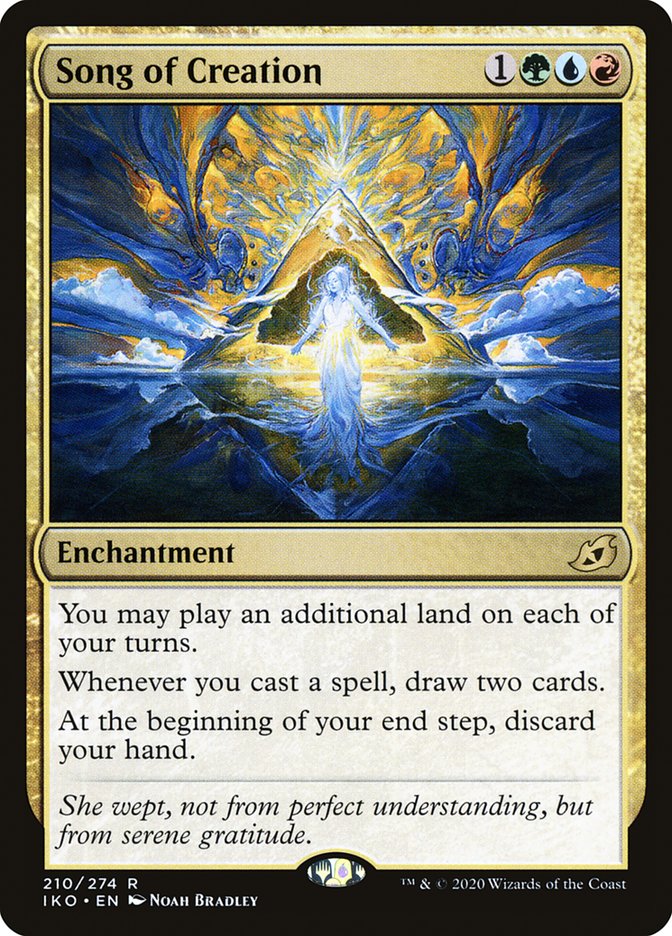
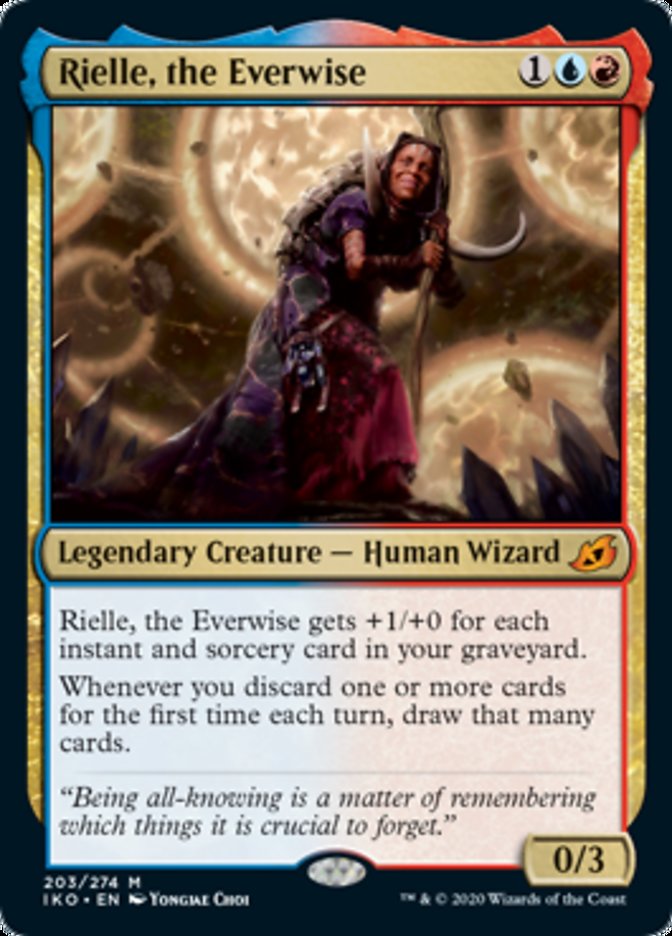
A few weeks ago a new Magic subreddit was created: r/JankMagic. Not sure what the impetus was, as there are already oodles of Magic-related subreddits, but I took a look at the smattering of initial posts. One featured a deck based around Rielle, the Everwise and Song of Creation. It looked silly yet synergistic, and I tried to build it from my Arena collection. I was a couple cards short, so I saved it as an incomplete build. I really wasn’t sure how the deck actually worked, but something about it nagged at me, and the next day I forked over a few wildcards to complete the deck.

After the first ten games I think I was 2-8. Most of the losses were total blowouts, one win was a bit of a fluke (deck won despite not doing what it was ultimately designed to do) and one win was among the most bonkers moments in my Magic life. That one crazy victory, when everything came together, was as close to a “perfect” Magic moment as I think I can get. And from that one wild win I knew there was something to the deck.

It’s linked above, but the be explicit: if you’re interested in trying it out, my current build is here: Rielle’s Top 40 Hit. I have no doubt this isn’t the best way to build the deck, but it’s the build I’ve settled on for now.

So how does it work and what does it do?


Initially I was going to say something insipid like “the goal of the deck is quite simple.” But it’s not. The whole thing hinges on Song of Creation, so there is a single, simple goal you start with: get Song of Creation into play and untap with it. Getting there, as well as what you do after you land Song of Creation, is most decidedly NOT simple.

Deciding how to explain the deck is difficult, so I’ll try to explain how it might function as a game progresses.

The deck is ostensibly three colors, but the only card with green in its cost is the most critical – Song of Creation. If my opening hand has Song but no green mana, I’ll most likely keep it. I rarely mulligan with the deck – partly because I am bad at knowing when to mulligan, partly because I hate taking the substantial hit to my chances at winning to go to 6 (or fewer) cards, and partly because the deck already seems terribly suited to going second – going down a card AND going second feels like an auto-loss, regardless of what the new hand looks like.

Honestly, the deck is terribly swingy. Going second feels like a bigger disadvantage than normal, though I’ve yet to determine WHY that seems so. But the deck is capable of spectacular explosions of raw, zany synergy as well as humiliating lead-balloon collapses.

Turns 5-6 feel like the most critical. Now, to be fair, it’s entirely possible that’s true for MANY Standard decks. Mono-red aggro is often mentioned as a deck that needs to win by turns 5 or 6 or it’s likely to just fizzle out, for example. But Rielle’s Top 40 Hit feels different. Turns 1-5 are, as with many decks, largely about setting up the back half of the game. And there’s enough flexibility that you can push the game in several directions based on your early plays and draws. But by turn 5 you typically have a very strong notion of what will happen next – a glorious ascent into synergy nirvana, or a descent in fiery failure like an Evel Knievel stunt gone wrong.
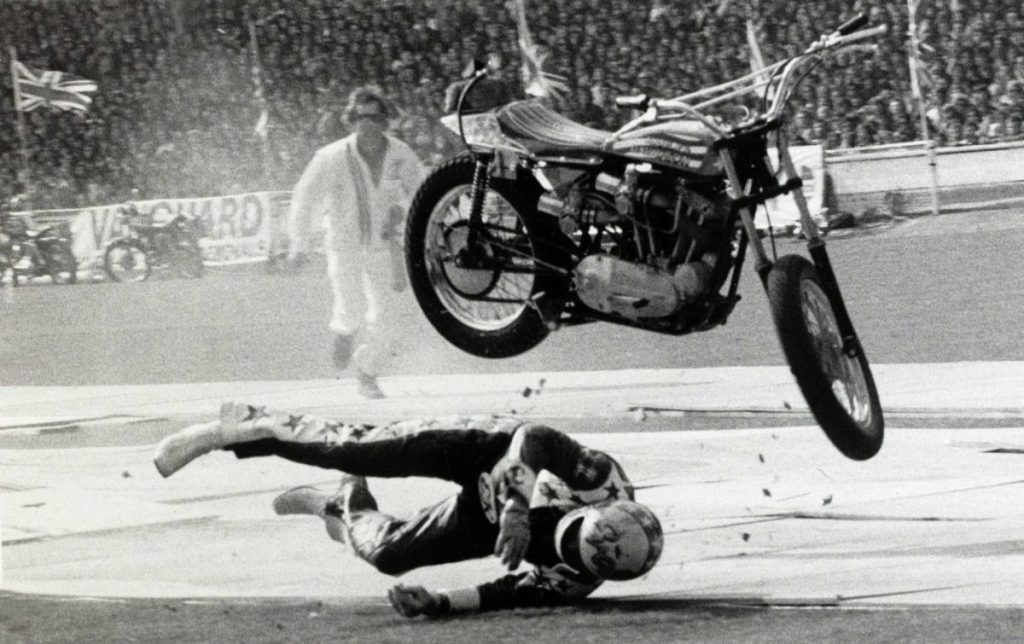
Artist representation of this deck’s performance about 50% of the time

I’m getting ahead of myself. Let’s back up to the first few turns. Sprite Dragon is one of the primary win conditions, whether you get to use it in conjunction with Song of Creation or not. For as widdle and adorable as it is, opponents generally see it as the huge threat it is, and you don’t have many options to protect it. Against decks without hard removal, though, it can get too big to easily handle. Multiples are especially dangerous for opponents without board wipes. Given the choice of playing a second Sprite Dragon or holding up a Quench to try to protect the first, I’ll almost always drop the second flyer and swing.
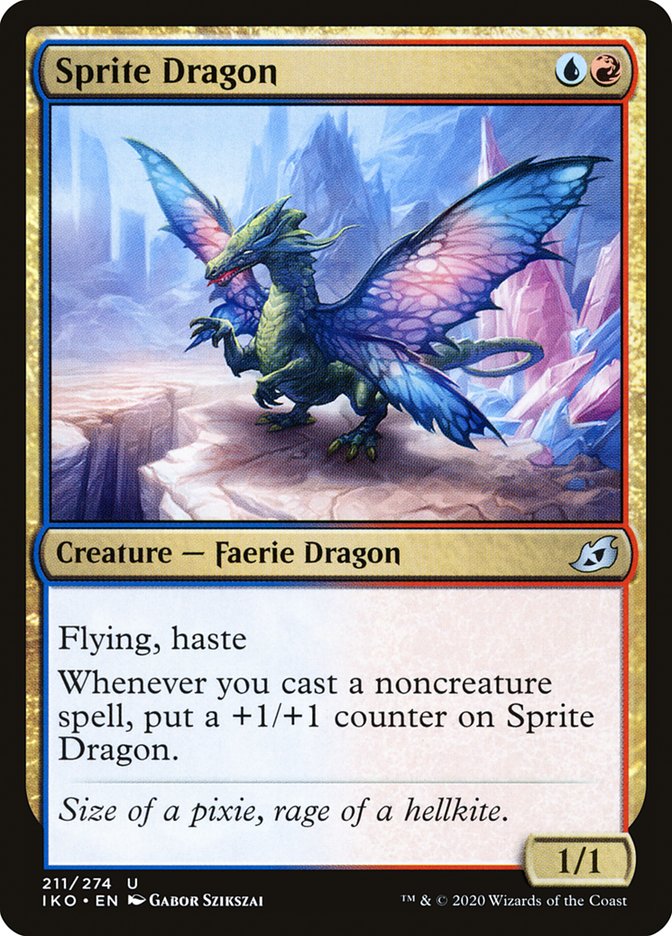
How you often win, with or without Song of Creation

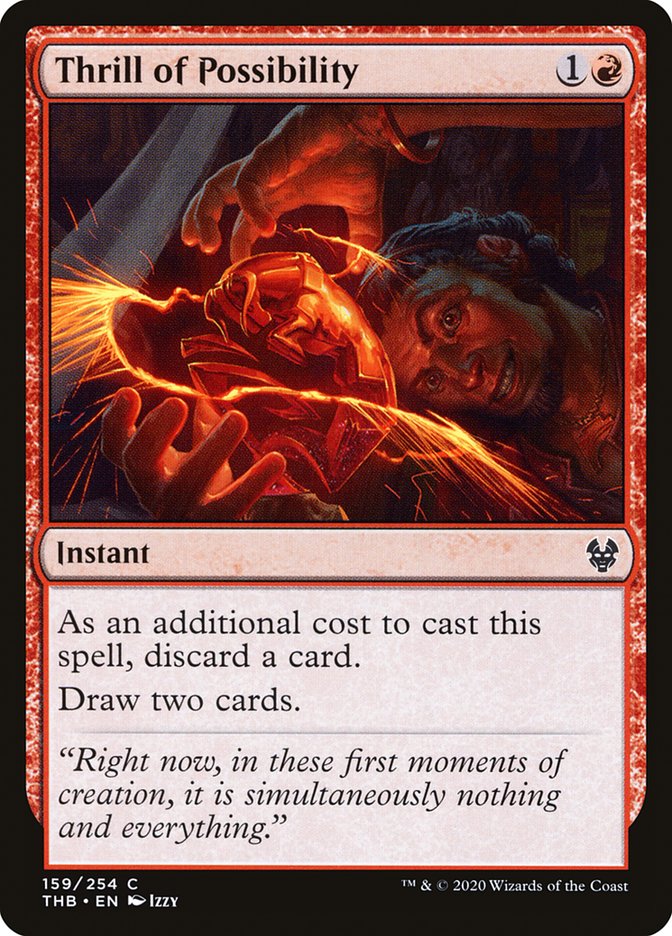
Opt and Thrill of Possibility are useful card filtering/drawing, and are pretty unremarkable overall. Just hope you don’t draw Thrill with Song out and an empty hand.
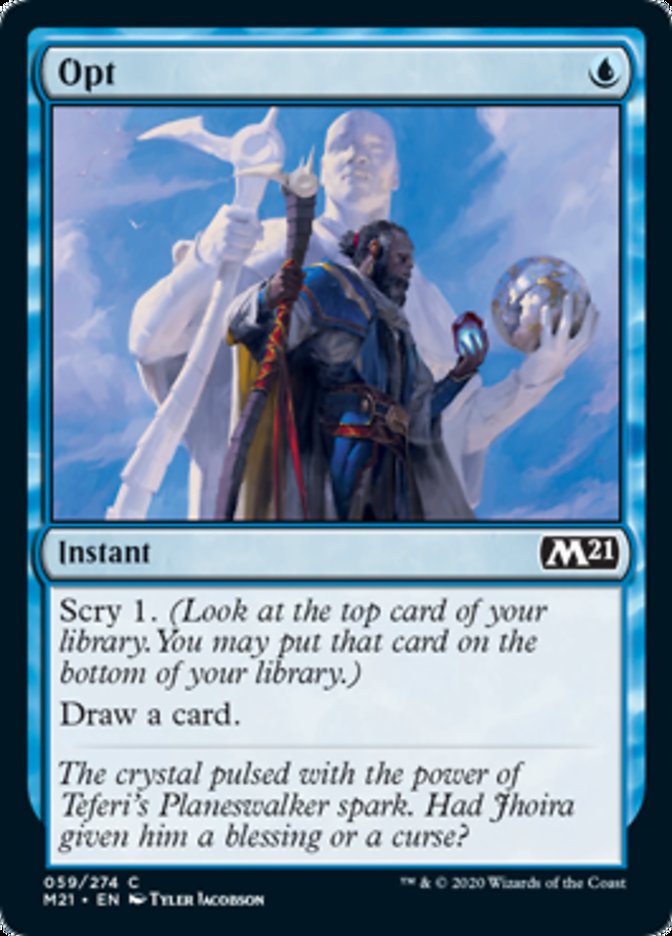
Ominous Seas is a perfectly acceptable and uninspiring early play. Having a couple in play can be devastating once Song of Creation hums, but playing one turn 2 or 3 feels largely feeble. It does nothing initially, except perhaps act as bait for enchantment destruction spells that might otherwise hit Song of Creation. Bounce is especially tough on it, so it’s not uncommon to lose copies with 3-5 counters on them. Still, copies that survive until you untap with Song are invaluable and can do some seriously heavy lifting for the deck.
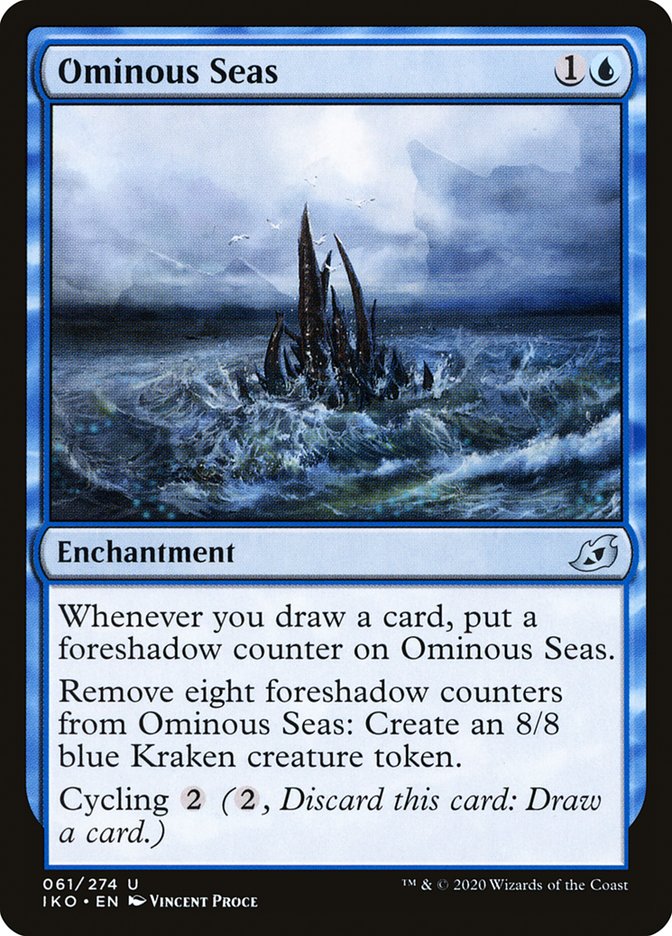
I always hate playing it early and am always glad I did if it survives post-Song drop

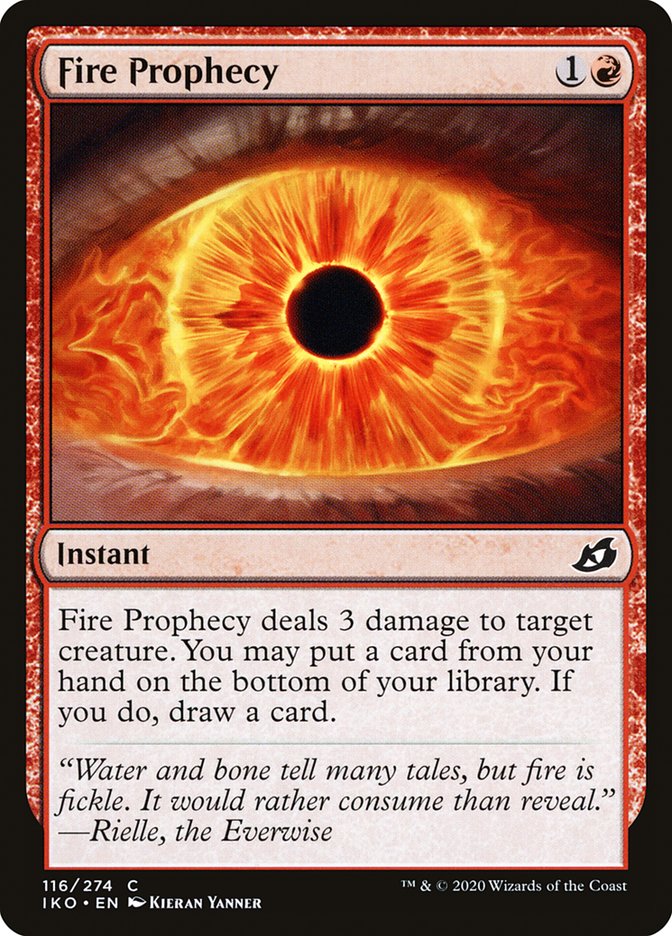
Fire Prophecy is (an admittedly) questionable inclusion. It’s narrow, hitting only creatures, and it’s limited to 3 damage, so it won’t handle large threats. But it’s proven quite useful at buying the deck some early time by clearing out small threats, as well as removing key chump blockers in the endgame. I haven’t tracked how often I use its card filtering ability, but I’d wager I’ve done so more than 60% of the time. So for now the card remains.
Sauron approves

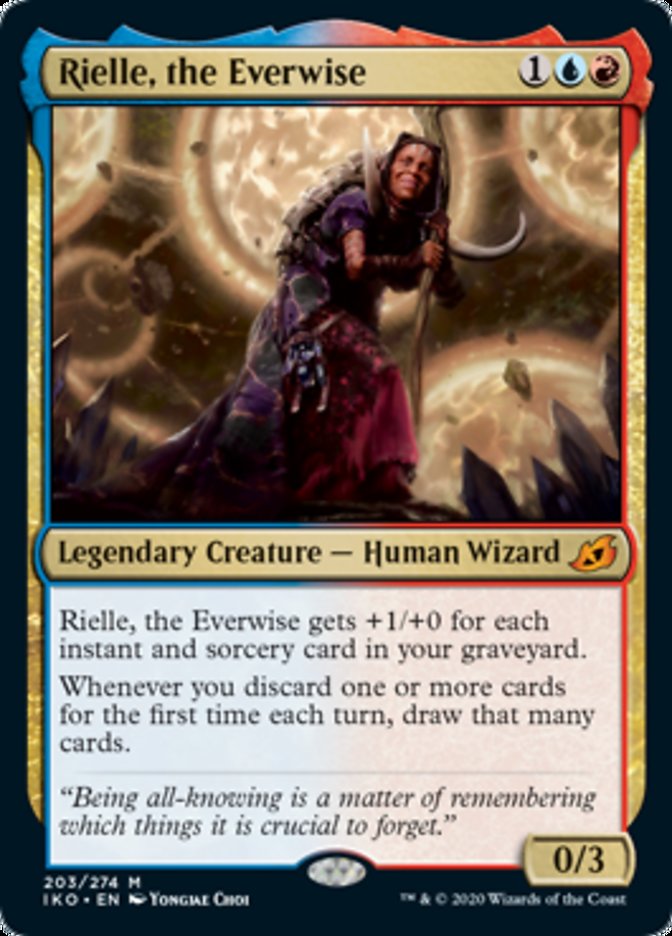
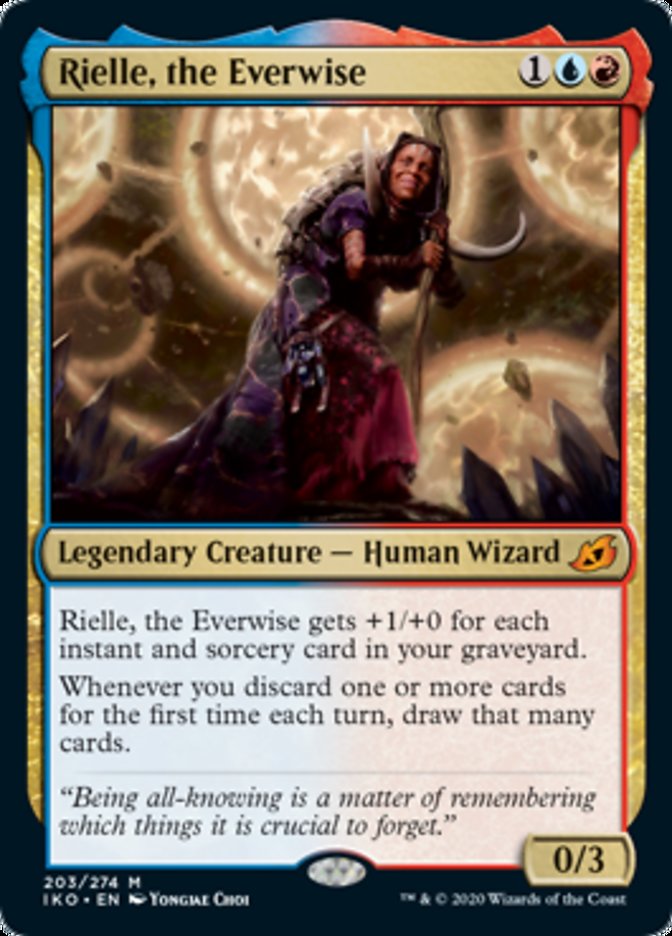
Rielle, the Everwise, like Sprite Dragon, can be quite dangerous if not answered. I think the biggest one I’ve swung at an opponent has been a 14/3. When presented with the choice of playing Song, or playing Rielle and waiting a turn for Song, rarely feels like a true choice – you have to play the waiting game and drop Rielle. The two together are a fearsome combination (more on this in a bit.)

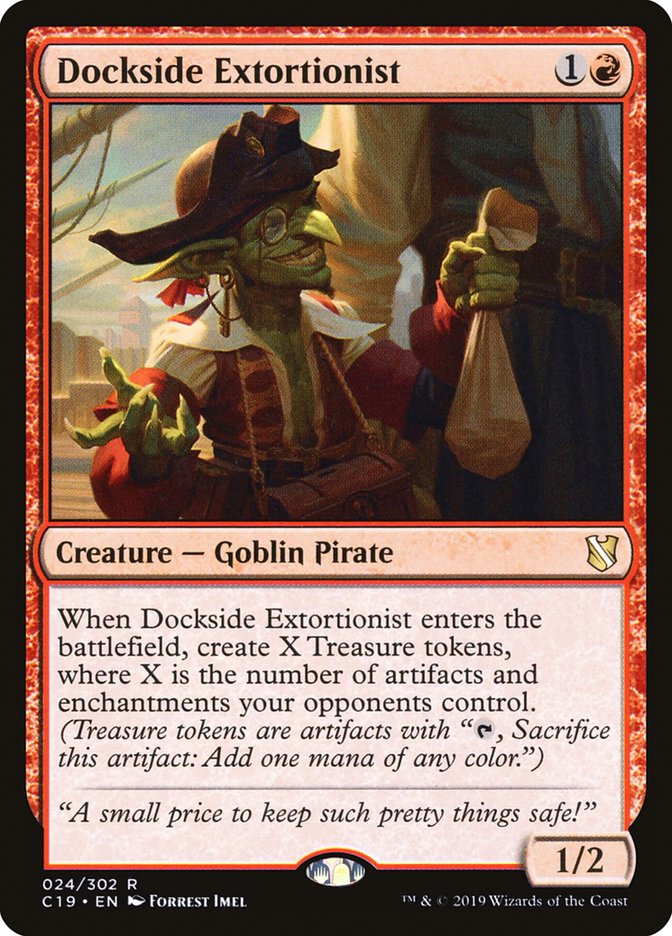
Brazen Borrower does some serious work, just like it does in seemingly every deck it’s a part of. I honestly feel kind of dirty using the card. Interestingly, it’s the creature half that I’m most interested in, and not as an attacker or blocker. If I’m a turn away from playing Song of Creation, I will use the adventure half to bounce even the most inconsequential permanent my opponent controls in order to ensure the creature half of the card is waiting in exile to be played when Song is out. I’ll expound on this in a bit.
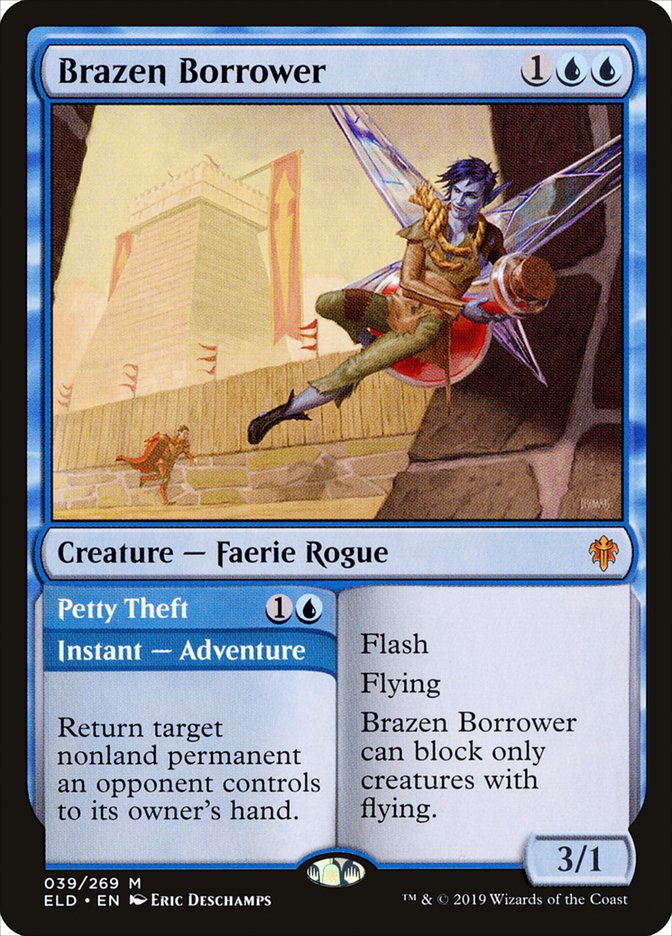
I’ll bounce garbage just to get this into exile, so it will trigger Song on a later turn if need be

The other three-drop creature, Glint-Horn Buccaneer, is among the cards that would probably be cut first, were I to make changes to the deck. The double-red in the casting cost has locked it in my hand from time to time, and it’s activated ability is rarely useful (though it HAS saved a couple games when I needed a spell to trigger Song, but was holding only lands.) The minotaur’s triggered ability is the real reason he’s here – each card you discard due to Song of Creation is a point of damage to the opponent. It can be trivial or substantial, frequent or rare, and thus I’ve determined that I can’t yet determine if the card deserves slots in the deck. For pure synergy alone, I think it’s a fun inclusion.
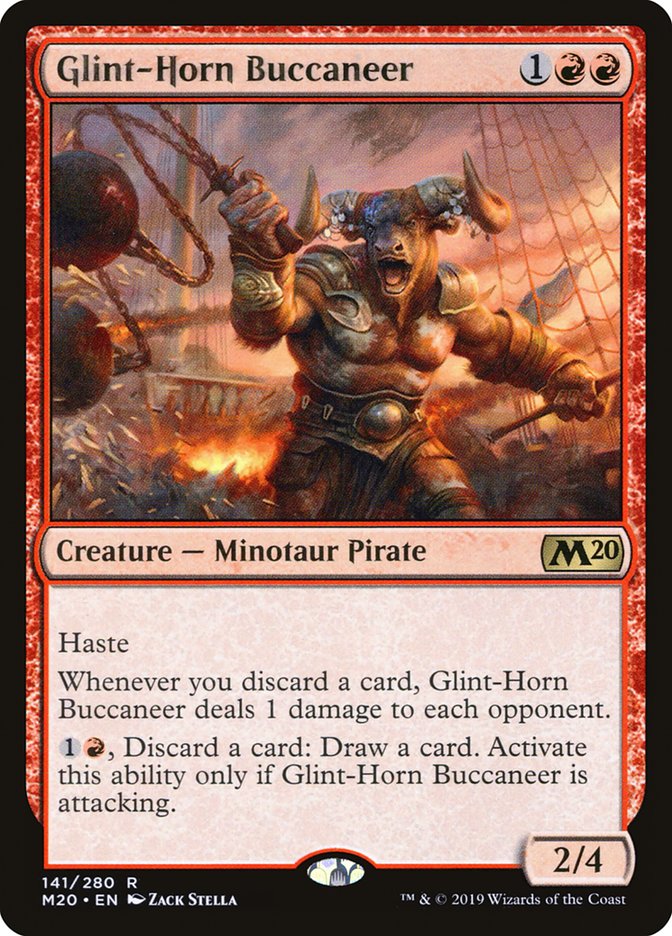
I may be overly fond of this card simply because it’s a minotaur

Ral, Izzet Viceroy is another potential cut. With Song in play, his +1 ability is a great way to find a spell to cast when you’re stuck with only lands in hand. The -3 is also the only truly potent removal in the deck, and I’ve used it to kill some pretty beefy targets. Ral can also draw attention when I’ve failed to find a Song and need to buy time. I’ve thrown him out to do nothing but absorb damage on many an occasion.
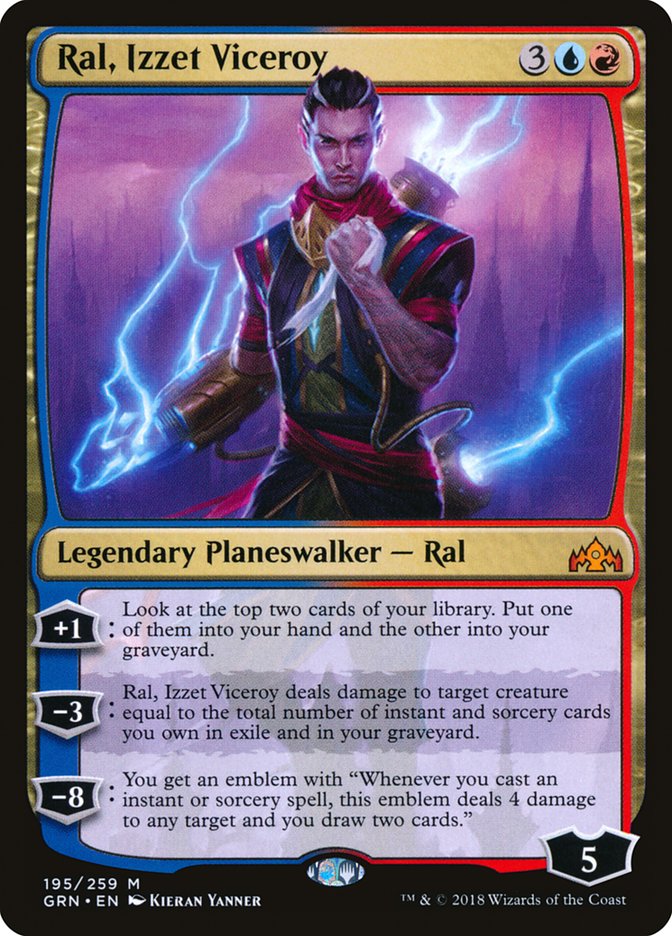
Sometimes removal, sometimes a damage sponge, and the +1 can save your bacon

Finally, there’s the Song itself. Play a card, get two more. Run out of mana or actions, and you pitch what’s left in your hand. Not always a great trade-off. As happens too often, I’ll get Song into play and pitch my entire hand, only to draw a land my next turn and be stuck with no play. That particular sequence has probably meant certain death 95% of the time. That’s why having Rielle out before dropping Song is SO good – it guarantees that I will redraw the same number of cards I pitch at the end of my turn, all but guaranteeing something to play my next turn. That’s also why having a Brazen Borrower waiting in exile can be so useful. As long as I have the mana to play it, I can always trigger Song via the exiled Borrower in a pinch. It’s often a last resort, since the faerie itself rarely proves useful as a creature in play.

The perfect setup, which I’ve managed a few times, involves dropping a Song of Creation with Rielle, a Buccaneer, and at least one Ominous Seas in play. A Sprite Dragon is just icing, though they are often perfect drops after untapping with a Song. Play a Dragon, draw two cards (hopefully one of which is a Seas or an Opt) and start the frenzy.

Holding a full grip of cards with 7-8 open mana is intoxicating, particularly as you watch the draw counters pile up on multiple Seas in play. I clearly recall ending a turn with 3 Seas out – one had 24 counters, another 19, and the third 12. Most decks have no answer to four 8/8 Krakens able to be created at instant speed.
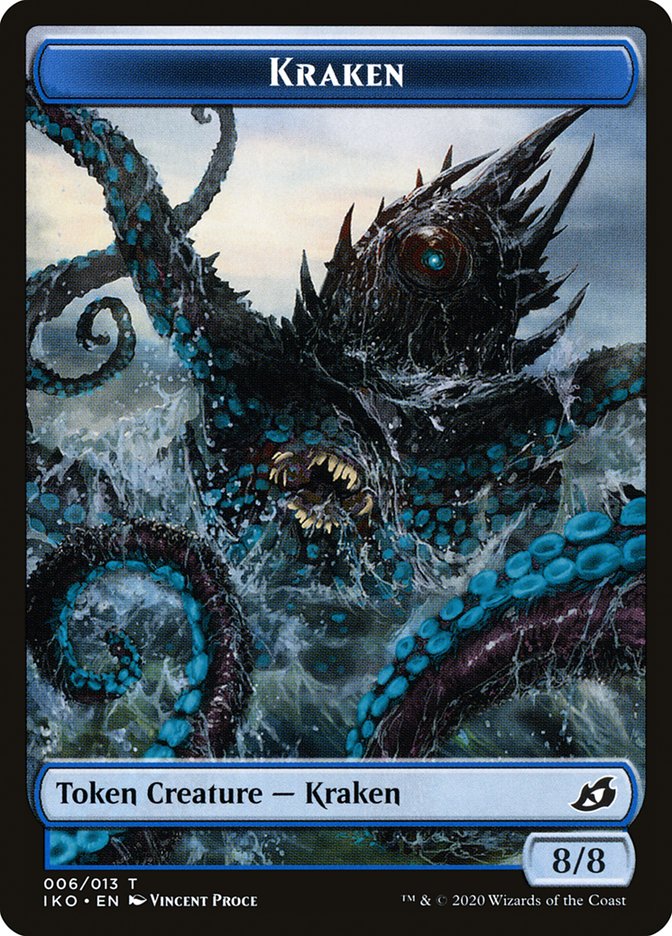
If you have 3 or 4 of these in play, you’ve been seriously movin’ and groovin’

The deck isn’t especially powerful unless it gets multiple critical pieces assembled, so it doesn’t win at a generous clip. And I’ve lost multiple games by decking myself, which is a real danger if your opponent removes your early threats or bounces/kills your initial Krakens. In those scenarios you’re left thrashing about trying to wrack up enough draw counters to make more Krakens, or get enough counters on a Sprite Dragon to club the opponent for substantial damage. I have a single Clear the Mind in the deck, and I think I’ve used it meaningfully just once. As Murphy’s Law would have it, I tend to draw it when I have run out of mana to play it, and it gets binned at the end of my turn. I’ve considered adding another copy, or even playing Jace, Wielder of Mysteries, but have yet to test either change.

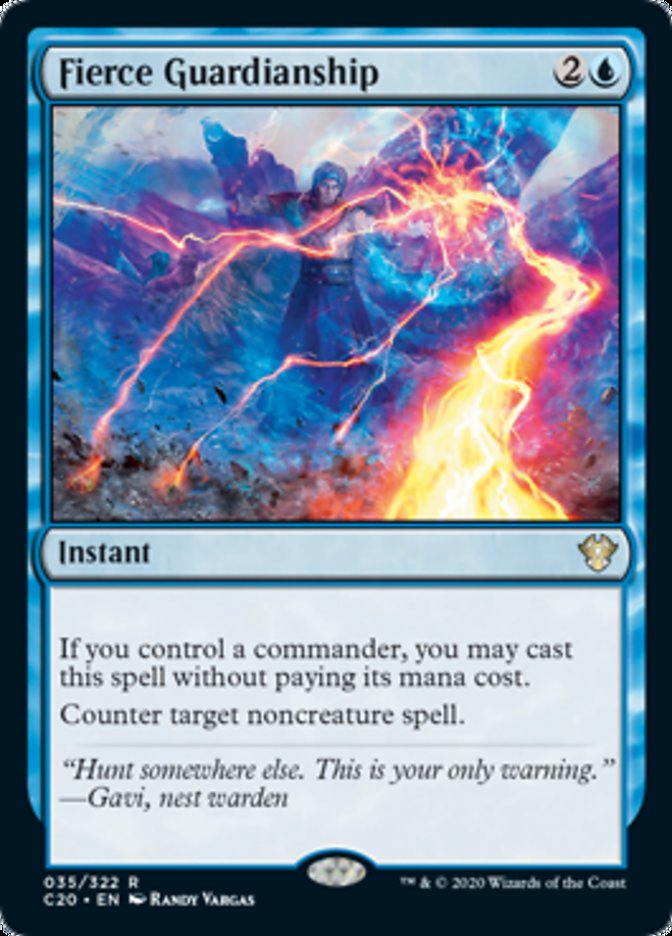
Of all the cards in the deck, Quench is the one I agonize over the most. It’s truly a love/hate card based on when I draw it. It has been invaluable time and again in the early game, when I can try to keep dangerous threats off the board (things like Ajani’s Pridemate, Brineborn Cutthroat, or Priest of Forgotten Gods.) However, once Song of Creation gets chugging, it’s almost universally a dead card. Draw it with an empty hand, and you’re passing your turn and discarding it. Draw it in the middle of a Song chain, and it’s only useful if your opponent attempts to do something like kill a creature AND they virtually tap out to do that. I’m honestly not sure whether to keep it or drop it. The early game disruption potential of Quench is massive, while the mid-to-late game uselessness of it is tragic.


Since I don’t imagine people visit this blog for deckbuilding advice or tips, I’m not sure any of you will try this out. If you do, two things:

  1. Prepare to lose often, but rarely win in such a fashion that you weep giant tears of joy (or relief)
  2. Please let me know how it goes, and if you make any changes to the deck. I strongly suspect there are ways to make the core of the deck more robust, but thus far such changes have eluded my tinkering.

Next time…who knows? All of the posts I have “in the can” are more serious, and I have a strong desire to keep things light and fluffy for awhile. The state of the world being what it is, I need to express some positivity more than I need to over-analyze or rant about anything.

Maybe a report on M21 prerelease kit battles with the kid?
Change Must Come

6/11/2020

I’m going to interrupt my scheduled blog post about my current favorite deck on Arena to say a few words about the current U.S. climate and Wizards of the Coast’s response. I don’t know how many people will read this, or will find it thoughtful or well articulated. But I felt like saying nothing is no longer what I want to be doing.

First and foremost: black lives matter.

Second: Wizards of the Coast definitely has a hiring and/or culture problem that needs to be addressed.

Third: the collective outrage at Wizards’s initial responses to recent events in the U.S. is overblown and painful to witness.

Last week Wizards released the following statement regarding racial injustice:

It’s among the thousands of statements made by companies throughout the U.S., and I don’t expect anyone to be overly impressed with it. The charitable donations are, at least, concrete action, and a logical first step.

Yesterday they banned 7 cards for their “depictions of racism,” as outlined here:

https://magic.wizards.com/en/articles/archive/news/depictions-racism-magic-2020-06-10

I put “depictions of racism” in quotes because there has been a lot of heated debate about whether the chosen cards are, in fact, racist. I’m not going to wade into that particular argument. I’ll just say that I have no problem with Wizards deciding that certain cards from its past are not indicative of how they want the game portrayed in 2020 and beyond. A few have homes in Commander, and will likely continue to be used there despite the official bannings. It’s a largely symbolic gesture, and you can take it or leave it as you will.

What I feel the need to weigh in on is the amount of cynicism or outright anger people immediately began spouting about the decision to ban several cards for art or flavor reasons. Many people criticized Wizards for essentially “doing nothing” about racial injustice (some, I suspect, unaware of the charitable donations referenced above.) Some were furious at what they believe is the only response the company will take to recent events. Others seemed appalled that Wizards hasn’t already addressed their company culture and hiring practices.

Yes, Wizards has previously claimed they were “working on” the lack of diversity within their walls, and there’s no clear sign of such work. But I don’t believe they can, or will, do nothing going forward. They’ve promised change, and I honestly believe we’ll see it. Not because I have some inherent faith in Wizards to naturally “do the right thing”, because it’s clear that’s not been the case in the past.

I believe change is coming, not just at Wizards, but across the country, because there’s no alternative that doesn’t end very, very badly. And as cynical as I can be at times, I don’t believe recent events are leading to a terrible endpoint. There is real change already happening in America, and the death of George Floyd has been a catalyst for huge changes that previously seemed improbable if not impossible.

How quickly change comes to Wizards, and what form it takes, may very well not be satisfactory to many. But I don’t believe doing nothing is an option they will take.

Banning 7 cards for art or flavor reasons has already proven highly controversial, with a lot of players railing against “virtue signaling” or what they perceive to be an empty gesture. As (thankfully) some players have pointed out, this was a simple measure the company could take quickly. It was NOT the first action they took – the above PR statement and monetary donations were – but to believe it’s the ONLY action Wizards will take is, I think, excessively cynical.

I get it – to many, Wizards is an awful, hollow, greedy corporation that doesn’t care about the game or its players. Banning cards for art or flavor reasons seems superficial and merely performative. Many feel it was unnecessary or revisionist, done to placate a small number of overly sensitive players (who they may believe don’t actually exist.)

Whether you agree with the decision or not, it’s a start. Should Wizards have made more significant changes long before recent events put such a spotlight on racial injustice and systemic racism? Of course. Does it look bad when any company “takes a stand” over something they should have been standing for/against years earlier? Obviously.

Companies, like people, can have moments of awakening that are long overdue. It’s absolutely fair to criticize a company – or person – for turning a blind eye to problems that should have been previously addressed. Wizards has opened its eyes (or, perhaps more accurately, had its eyes forced open) and has pledged improvement. And I have no doubt that the very vocal playerbase who are demanding action will hold them accountable for promises made.

I believe change will come. What it looks like, or how soon it arrives, is going to be another huge flashpoint that will spark a lot of debate. But I believe Wizards deserves an opportunity to prove they can grow and change.

And Wizards must change. I honestly believe they know it. Lip service will no longer suffice.

My hope is that players will show some patience and temper any outsized expectations. Real change is necessary, but it may come slowly. Banning a few cards was one small gesture that could be made quickly. Changing a corporate culture will not happen in a few months.

Considering its history, are there any small actions Wizards can take that won’t be labeled “virtue signaling”? Is there any way they won’t be criticized for tokenism when they next hire someone black? These are necessary actions, and lambasting Wizards for making them will not be productive. They must be only the start of real and sustained change, and that is how we should ultimately judge the company.

Recall that as the cards themselves began to more closely reflect the diversity of the real world, an extremely vocal minority railed against the changes, some even going as far as to claim that Wizards was pandering to SJWs and it would be the ruin of the game. Instead, the game has thrived and slowly (far, far too slowly) began to widen its appeal to people of all races, genders, and creeds. Having almost exclusively white people create art depicting a more realistic ratio of people of color wasn’t acceptable. But it was better than what had come before. It wasn’t sufficient, but it was progress. Today, more than incremental progress is needed. Wholesale change must come.

I sincerely hope that when I’m an old man, there will still be opportunities for me to change the course of my life – to try and fix what I’ve broken, to change beliefs I’ve wrongly clung to. And in those moments, I will surely feel shame for having let the situation stand for as long as I did. I’ll (hopefully) accept criticism for my failures, and be allowed to prove I can be better.

All of us, including Wizards, can be better.

Reveal injustice, demand change, and celebrate true progress.

Riffing On Rifts

June 2, 2020

power creep – noun : (collectible games, computer games, role-playing games) The situation where updates to a game introduce more powerful units or abilities, leaving the older ones underpowered

Holy Flying Spaghetti Monster, has Magic become a mountainous mess recently. Yes, yes, of course it’s “been a mess” for the bulk of its existence. The last few weeks though… oof-nicity abounds.

As a casual/middling player, it’s always been easy to tune out, discount, or ignore the vitriol that Magic players are famous for spewing. But it’s just been SO inescapable for anyone who is plugged into the game and its community. I contemplated riffing through the various controversies and giving my take, but the many and varied Magic channels are overflowing with grousing (which, sadly, is mostly what I’d be doing.) Why add to that?

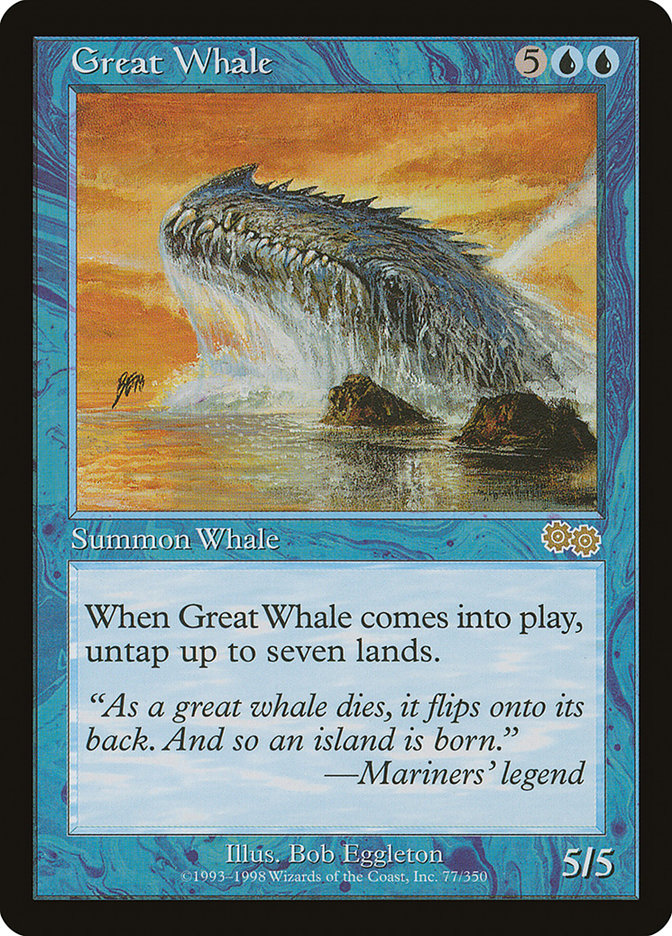
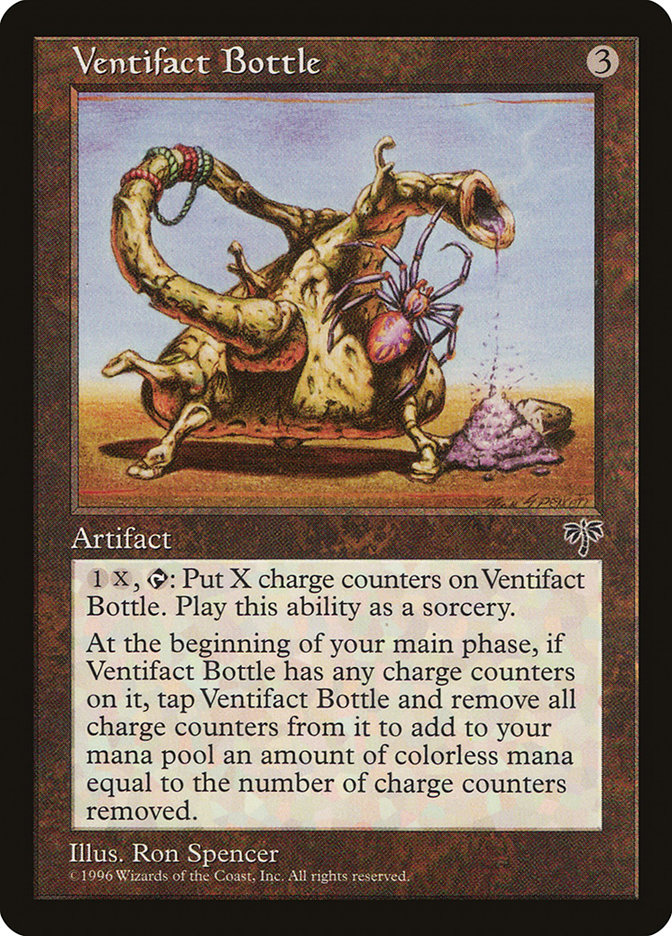
Instead, I’m going to look at if (how?) Magic can course-correct. Can they stick the Erhnam Djinn back in the Ventifact Bottle?

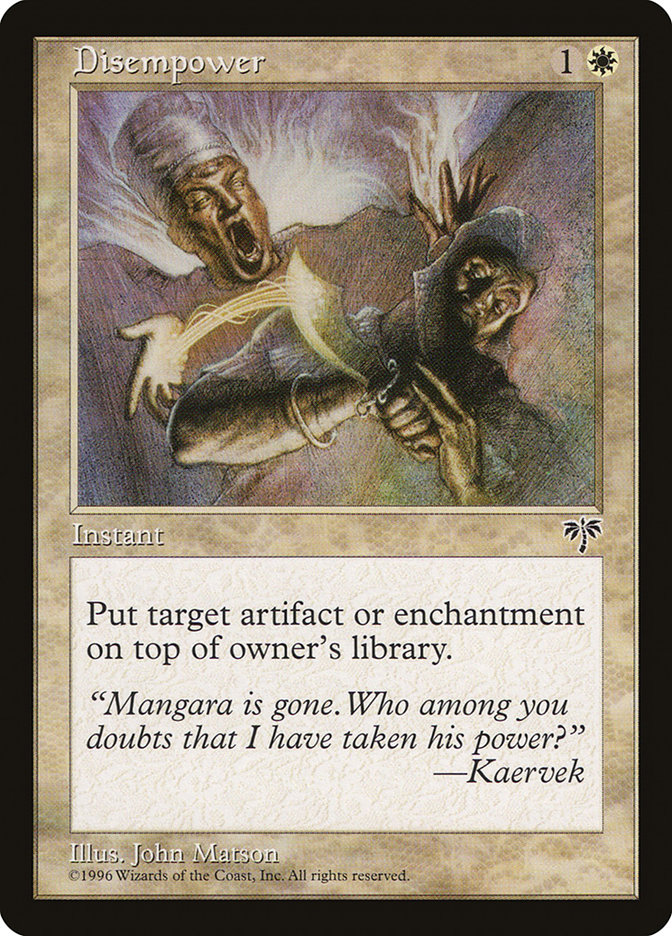
If I were a genie, I’d refuse to go back in this thing

What follows are my thoughts on several notable Magic controversies, but rather than just adding my scream to the hurricane of rage (because, really, I can’t spin any of this positively) I’m going to give my middling Magic perspective on how the future looks (hint: I’m not wearing shades.)

Standard Power Creep

Truthfully…this one has me befuddled. Magic has, of course, undulated the power level of sets and environments for the entirety of its history. The powerful Urza block begat the woeful Mercadian Masques, the largely broken Mirrodin block foisted upon us the bizarre and feeble Kamigawa, and (going the other direction) the moderate Amonkhet and Ixalan blocks launched us into the WAR/ELD/THB/Companion nonsense we’re currently saddled with.

Could a solution be easier? Just pull back! Reign in the Clydesdales – trade them in for Shetland ponies. And I do think this is coming. It almost has to be. What concerns me is the timing.

Wizards started juicing sets with WAR (released in May of 2019), and told us about their new doping regimen in June of that year. Though WAR‘s power level raised some eyebrows, few were grousing about power creep. I doubt many were even concerned about it based solely on WAR. Established players remembered (and largely not fondly, mind you) the Amonkhet and Ixalan blocks, neither of which could be mistaken for all-time Standard juggernauts.

In mid-2019 I don’t think Wizards had a real accurate picture of what Magic would play like in mid-2020, and surely they weren’t anticipating the steady howls of displeasure over power creep that have become staples of online Magic content for months.

Considering how long in advance Wizards works, it’s quite likely that the sets staring at us from the near future were completed long before R&D may have taken their foot off the accelerator (assuming they’ve done that at all.) Core 2020 was a significant upgrade over the mediocre Core 2019, and by all accounts, people really enjoyed the stronger suite of cards printed in Core 2020. I can’t fathom Wizards ignoring the success of Core 2020 and returning to something more akin to Core 2019.

And then there’s this fall’s Zendikar Rising. I started my 8-year Magic hiatus just as the original Zendikar was released, so I have no personal experience with the set. People gush excessively about the set’s overall quality, though. Wizards’ return to the plane in the fall of 2015 for Battle for Zendikar was, from what I’ve gleaned, exceptionally disappointing. Fans of the original Zendikar seemed particularly aggrieved. Redemption was assuredly foremost in the minds of Wizards R&D as they designed the upcoming re-return. And Wizards can’t possibly redeem a previous failure through flavor and art alone. The cards will have to be good, and they’ll have to hold up with what’s already in Standard. WAR may be rotating out of Standard this fall, but ELD, THB, (and to a lesser extent IKO) have set a baseline that I think Zendikar will comfortably hurdle. Players will not want a low-powered set based in Zendikar, and I’m certain Wizards will not let that happen.

What happens after that? I think we’ll see a step back…eventually. Will that be the first set release of 2021? Or are we staring down another year (or more!) of pushed releases before sets designed during the current bout of power creep outrage finally see play?

And one final note: whatever set finally eases up on the power, I sure hope it’s a flavor extravaganza. History shows that people don’t particularly like (or purchase) lower-powered sets. Magic may just need to take a sales hit or two in the name of re-balancing Standard. Can you imagine what will become of Magic if they refuse to do that?

Commander Power Creep

Yes, I’m sounding off on a problem in a format I don’t (yet) play. Heckle me as necessary.

Anxiety over the upcoming Commander Legends draft set due at the end of the year is already beginning to show. Players are genuinely worried about the price point (more on this in a moment) and what the set will do to a format that looks to be under some strain from power creep and homogeneity. And I feel far, far less hopeful about this one.

For several years, and throughout Magic’s product lines, Wizards has been introducing powerful commanders and extremely pushed and/or “stricly better” cards meant for Commander. A decent number of players have been lamenting both the lack of lower-powered “niche” commanders and the steady introduction of seemingly “auto-include” cards to the format.

Commander’s premier product line, the Commander precons, will continue to be the “face” of the format from Wizards’ perspective. How do you sell EDH precons? Include powerful cards, particularly face commanders. Maybe I’m not giving the Commander crowd sufficient credit, but people largely disliked C18‘s lower-powered decks, and those are still readily available to purchase for below the usual $40 price tag. I can’t see Wizards downgrading upcoming face commanders or new card designs for what many players already feel are overall lackluster deck offerings (due to their lack of valuable reprints and sketchy mana bases in current Commander precons.)

Do weaker precons, and/or weaker offerings in the upcoming Commander Legends, really seem plausible? Many players SAY they want fewer top-end, value-heavy commanders or “must play” cards, but will people buy Commander precons that lack one or both of those things? There are people throughout all strata of EDH who want to play with powerful Commanders and powerful cards, even if they aren’t full-blown cEDH players. People like to play with powerful cards, regardless of format or overall personal competitiveness.

I predict Commander’s headlong sprint upwards continues for the foreseeable future. Perhaps the number of EDH inclusions in sets outside of the Commander precons will be be toned down a tad, but even that seems improbable – Standard players like their powerful legends too.

Double Masters and Pricing in General

Double Masters is overpriced. It will sell anyway. Absolutely no one doubts this. Everyone priced out hates this. Buyers will keep quiet (on the internet, anyway.)

And players feel like there’s nothing they can do about the situation…except rage.

Have you seen anyone proclaiming excitement about buying a box? I haven’t. And yet there are many, many players who obviously are. Every Double Masters $300 pre-order booster box Amazon initially offered was gone within hours.

On the Double Masters announcement stream the set was positioned as a way to get needed reprints into players’ hands. Then, after the initial firestorm over the $300 a box, $16 a booster price point, the beloved Mark Rosewater cast it as a “premium” product not meant for everybody.

Double the outrage!

My collection stretches back far enough that many desired reprints are either already in my binders, or are cards whose ownership I long ago dismissed as comical due to their price tag. But I still think it’s absurd that a 100% reprint set likely bursting with cards millions of players would like to own has been slapped with an outrageous “for whales only” price tag. It’ll sell out, Wizards will make its money, but the optics on this are abysmal.

And that, I think, is what’s most likely to be fixed next time around. Future “premium” reprint sets may not be labeled as “Masters” sets, since that word has certain connotations for players. And the initial messaging about the set will likely make it clearer that they are “whale-centric”, as opposed to “general purpose.”

Making reprint sets “premium” products with “premium” prices, in a game with thousands of cards many players are priced out of, is abominable. And I wish people wouldn’t support it. But scads of them will. Hefty profit will be made.

Artist rendering of a Hasbro executive upon receiving Double Master profit report

That said…

It’s curious that players rage about Wizards chasing short-term profits at the expense of a long-term outlook. Double Masters appears to do both. Obviously there is significant short-term profit to be made here, but the very reason Wizards doesn’t print huge swaths of expensive cards in $4 boosters is to protect Magic’s future profitability. If every desirable card was readily available for a reasonable cost, do you really think players would continue to buy boxes and boxes of product? Of course not. So what would Wizards then be able to sell, exactly? I don’t think selling new sets to Standard players will ever satiate the corporate overlords.

It’s possible that Wizards will have “gotten the message” (outrage) and will find additional different, truly “premium” products to push in the future. A draftable set of reprints is an awful candidate for that role. Honestly, I don’t know how much fury the company is comfortable ignoring in the hunt for currency. Players have raged about lesser sins oodles of times before, so this could prove to be just another episode of brushing off the part-time pitchforks.

Beyond Double Masters, the dissolution of MSRP grows more frustrating with each passing product. Will Commander Legends be priced similarly, in the $10-15 range for a pack with 20 instead of 15 cards? Will there ever be another reprint set NOT priced 2-4 times the cost of a Standard booster pack?

And the underlying question I (and doubtless many others) have: if Wizards refuses to acknowledge the prices of cards on the secondary market, why is it acceptable to up-charge – sometimes spectacularly – Secret Lairs or sets that contain cards that are expensive on the secondary market? Mark Rosewater essentially admitted that “desirable” cards will come with a “premium” price point. Why? They don’t cost more to produce or market or sell.

Collector Boosters, which run $15-25 each, are considered by most players to be an acceptable way of monetizing desirability. Those same cards are (mostly) available in draft boosters, with “standard” (not the format) art. Secret Lair releases, though certainly a stronger source of frustration and anger within the Magic community, are similarly seen as tolerable ways for Wizards to make bank off of fancy cards.

Obligatory “whale” card when discussing whale players

Obviously a draftable reprint set with a giant markup is a step (nay, a triple jump) too far for many (me included.) I’m admittedly shocked at the sheer volume of bile players are spitting, considering the exorbitant prices of some previous Masters sets, but I’ve always been baffled by so many people’s willingness to pay the going rate for such releases. I thought it was a mistake to charge that much, and pay that much, then.

Wizards learned they could charge premium prices in the past, and I suspect they were a little blindsided by just HOW upset people are about Double Masters. I think part of the anger is due to just how brazenly the set is priced, and part of it is simply fatigue with the now-expected “no MSRP”/”product isn’t for you” mantras.

Wizards isn’t going to go back to setting MSRP on their products, but I do suspect they’ll get more creative about how they try to pry cash from whales. Secret Lairs are going to continue to flourish. Collector Boosters – a product many thought would exist for a few sets before being retired for a different stunt – look here to stay, based on the availability and cost of IKO Collector packs. My guess is that, if Wizards (wisely) decides to avoid another Double Master PR debacle, they’ll introduce something new (but possibly ongoing) in 2021 aimed squarely at whales.

I had some additional material written about Companions and the state of Standard, but Monday’s Banned and Restricted Announcement rendered that material moot. So…next time: something fluffier – my new favorite deck!

Middling Magic Gets Mooshed

May 22, 2020

domineer – verb : assert one’s will over another in an arrogant way

I have never played EDH/Commander. I’d like to, but I have no current playgroup (apologies to my son, but he’s not sufficient.)

The LGS I’ve visited for prerelease tournaments since Ravnica Allegiance hosts a Thursday night Commander event, and awhile back I contacted them about possibly attending. Sadly, they were in the middle of a Commander League (whatever that is) and I was told I would likely not be able to play standard Commander games until the league finished multiple weeks later.

That was…off-putting. So I shelved the EDH notion for quite a long time. Then in February, with my wife and son planning to visit family in Florida for a few days, I checked with the LGS about the Commander night for the Thursday I’d be on my own. No Commander league, just free play. Huzzah!

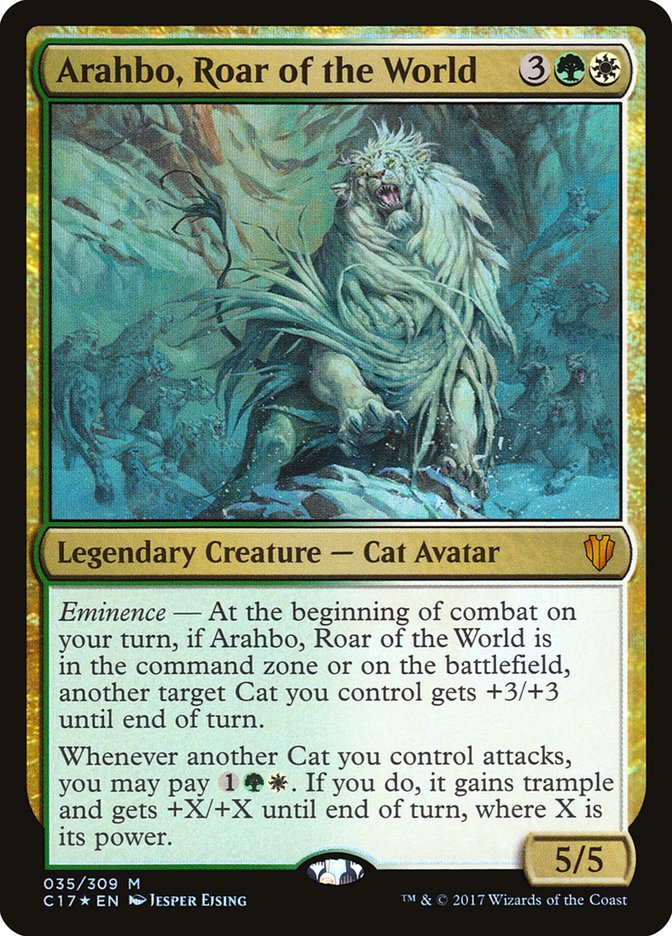
Had I gone to Commander night, I’d have been sporting this fellow, who I gather people detest because Eminence is great (i.e. awful)

But as news of COVID-19 worsened in the days leading up to that Florida trip, my wife smartly decided to cancel the flights and not risk exposure. I spent that Thursday night with them, as I am wont to do.

Perhaps later this year I’ll look into it again, but for now I’m just a guy that reads about EDH on occasion, watches most Game Knights videos, and is tangentially aware of the current state of the format without ever having played it.

And anyone even peripherally aware of Commander is likely aware of the schism between EDH and cEDH players. Apologies to those already versed, but cEDH is a competitively-minded offshoot of EDH that has been growing in size (and voice) for a few years.

Commander started as a casual, even “goofy” format nearly 25 years ago, and eventually coalesced into what is now the most popular format of non-digital Magic (MTGO offers EDH, while Arena lacks the multi-player capabilities so crucial to the format, and instead offers only Brawl – sort of Commander-lite.)

There are official Commander rules, including the oft-debated “Rule 0” that states:

These are the official rules of Commander. Local groups are welcome to modify them as they see fit. If you’d like an exception to these rules, especially in an unfamiliar environment, please get the approval of the other players before the game begins.”

Not having played Commander, I am not touching the endless debates over the merits of Rule Zero with an oversized Chaos Orb. I lack the experience, context, or passion to engage in any such discussion.

What I do wish to highlight is that Rule Zero was intended to encourage players to talk about what they want from the game when they sit down to play it with strangers. If your deck is a low-power attempt at bear tribal, you’re going to want to make sure you aren’t sitting down with someone playing a deck capable of turn-4 kills by generating infinite mana. Eventually enough Commander players took deck building and optimization to its zenith, culminating in the cEDH format splintering off to become its own thing. And thus were spawned a million incendiary debates about power levels in Commander.

Accusations of pubstomping in Commander are not uncommon, nor are tales of angry words exchanged at LGS Commander nights over the spirit of the format or what is and isn’t “fun” to play with or against.

All of this finally, mercifully, segues into what I’m looking to discuss in my final installment (for now) of Middling Magic: pubstompers specifically and power imbalance in general.

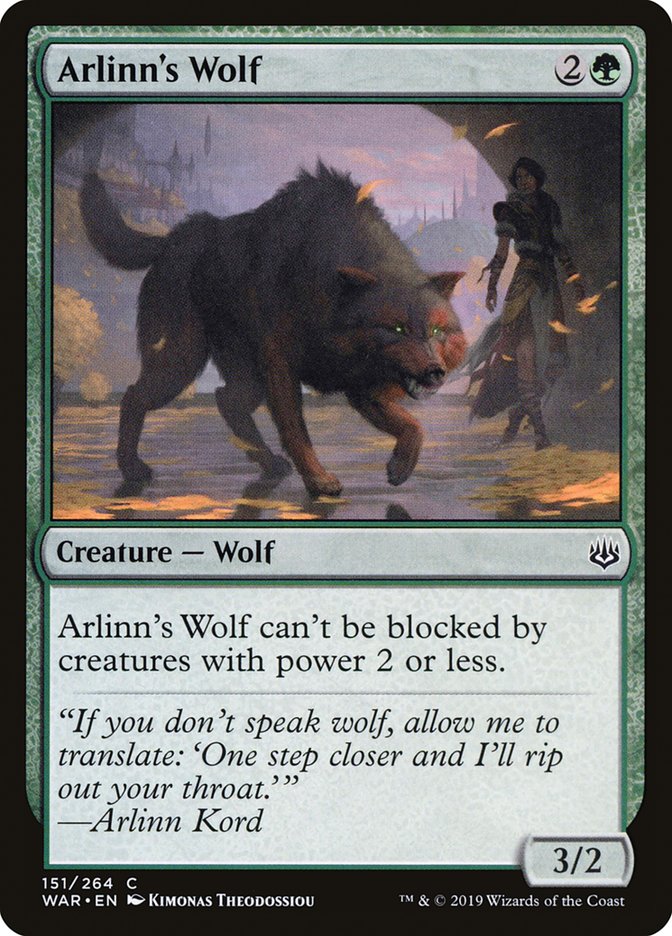
When I queue up my wolf tribal deck (yes, that’s a real deck I’ve frequently played) in the Arena “Play” queue, my play experience has largely been given over to Arena’s matchmaking algorithm. There is no Rule Zero that allows me to announce or discuss what sort of play experience I am hoping for. I may get paired with a new player learning the intricacies of the Dimir Welcome deck, or I may get paired with a mythic-ranked player running their Yorion/Lukka Fire of Invention monstrosity. To couch this in Commander terms, I can very easily end up in an EDH vs. cEDH situation.

If this is a key piece of your deck…you are NOT in a good place in the Arena meta.

I use an Arena plug-in that tracks quite a bit of information about my Arena experience, including a rather enlightening amount of data about my opponents and what they played against me. What was initially surprising was the large amount of highly ranked players I was facing in the unranked queue. Seeing the number of matches I’ve had against Platinum, Diamond, and even Mythic ranked players, was shocking. What was NOT shocking was perusing what these players played against me, as my plugin tracks all the cards it sees my opponents play.

These people are NOT slumming it with jank in the “Play” queue, folks.

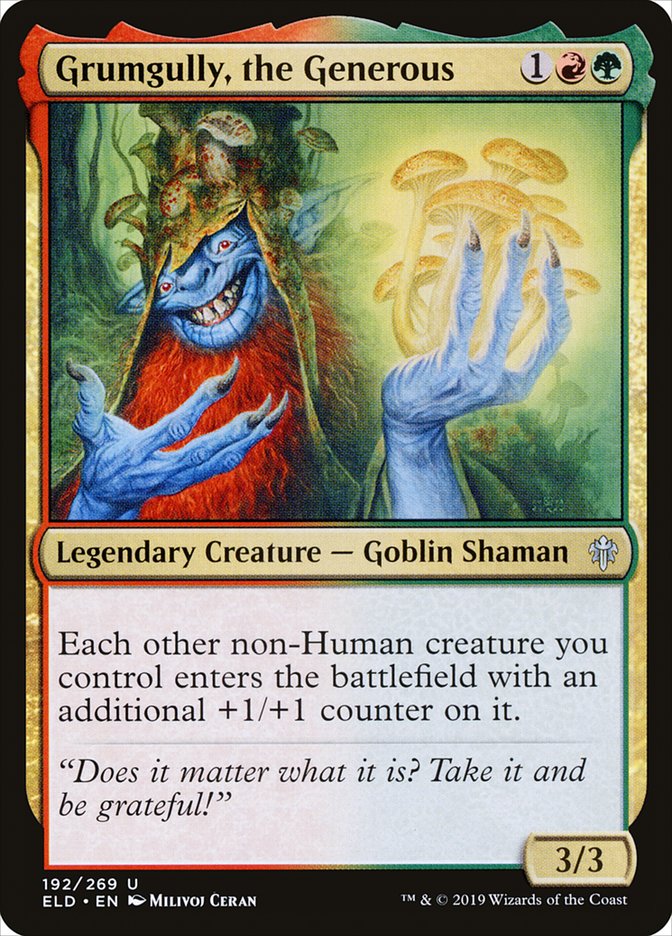
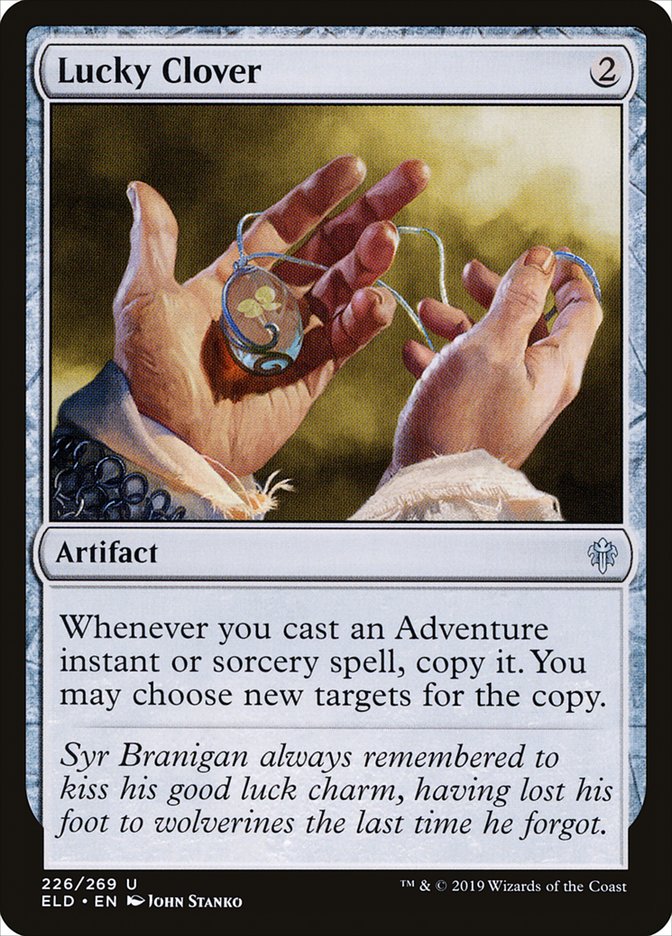
That Grumgully-centered Gruul deck I faced? Fellow bronze player. Overbearing Temur clover deck? Diamond 2 player. Upgraded Boros Welcome deck? Bronze 4. Brutally effective Esper control deck? Platinum 2.

These people are pubstomping. And probably quite effectively, too, based on a quick scan of my win/loss record against these highly ranked players.

What else would you call highly experience/successful players playing highly competitive decks in the unranked “Play” queue? These people can – and have – spent time climbing the ladder. Their ranks and their decks clearly prove they have the tools to play competitive games. And yet here they are, playing what I have to believe are the decks they use to grind up the ladder, pounding me into paste in the “Play” queue.

Is it just to earn the daily win rewards? You can earn those on the ladder, all while squaring off against better competition that will help you sharpen the skills needed to play competitively. Are you bored of meta decks, and looking for something different? Guess what – you too can play jank.

Oh hey, I think understand why you’re taking your tier 1 deck to the unranked queue: to beat up on weaker players/decks.

And that’s just bullying.

If a mythic-ranked player wanted a break from grinding the ladder to play a hydra proliferate deck, I’d be thrilled to square off. They’ll have the definite edge in play skill, and may very well have a better-built deck, but it’s not a David vs. Goliath scenario. But to bring a bazooka to a water balloon fight is absurd, and there’s only one way to describe it: pubstomping. And if my match history is any indication, a lot of players are doing it. Intentionally. Whether it’s innocent (“I only had a few minutes to play and wanted to get a couple wins for my daily rewards”) or malicious (“wrecking newbs is a blast”), the result is the same – a miserable play experience for one of the players.

And, as I’ve argued before, this is likely avoidable, if the Arena developers felt like addressing it.

Commander uses Rule Zero, and a relatively clear distinction between the competitive and non-competitive camps, to try and minimize poor experiences in EDH pods. Arena has nothing of the sort, meaning many players’ experiences are at the whims of a the “Play” queue’s opaque matchmaking algorithm.

I would sure love to see Arena help players looking for casual fun find it more readily and frequently.


Pointless Tangent Alert

I haven’t logged into Magic Online in years, and don’t have the client installed on my home computer. What follows may be a description of current functionality, or something that was ended years ago. I’m not going to install the client and log on just to confirm.

When queuing for a casual game in MTGO, players would start a virtual “table” by indicating they wanted a match, and there was a field they could type text into that would display as part of their match request. Players would sometimes use that field to make requests, such as “no counters” or “no blue” or “no net decks”. Prospective opponents could then manually select a table/request to take the other seat at the “table” and start a match. This matchmaking was not automated.

Invariably, angry and/or inappropriate words would be exchanged when the player taking seat 2 failed to heed (i.e. chose to ignore) the first player’s stated request. Most frequently, player 2 would choose a match with a description of “no counters” and opt to play a mono-blue control deck full of counters.

As an MTGO Adept for awhile, I got to see some of these chat exchanges when one player would report the other for abusive (and all too often offensive or homophobic) language. On occasion it appeared that a new player had legitimately failed to see the text description of the match, and was then textually abused for “breaking the match rules.” To my surprise, more often the second player would admit to ignoring the first player’s “rules”, stating some variation of the following:

  1. I thought that was just a suggestion
  2. Players don’t get to set rules on what can and can’t be played in a casual game
  3. I wanted to show them what real Magic looks like

What the honest response would most likely have been:

I wanted to ruin someone else’s experience because I find that entertaining

Honestly…I don’t miss being an Adept.

Middling Magic vs. The Meta Deck

May 14, 2020

maleficent – adjective : causing harm or destruction, especially by supernatural means

Having covered Arena’s shoddy matchmaking in a previous column, I’m going to turn to the second reason for my recent disappointment with casual play on Arena:

  • Meta decks in the unranked “Play” queue

If Arena’s matchmaking was better, I wouldn’t be grumpy about this. But it’s not, so I am.

An exaggeration of my mental state, but there are no cards with the word “grumpy” in them, not even flavor text!

The obvious question I have – that a number of people have, based on the occasional but regular posts about it on the Arena subreddit – is simply: why?

Why bring a tier 1 (or near-tier-1) deck into the unranked “Play” queue – the queue that is sometimes referred to as the casual queue? The queue that, one assumes, the Arena developers created for players disinclined to play super-competitive matches or “climb the ladder”?

Ironically, this was not a good card for climbing the ladder

Let me take a moment to explain what I mean by “meta deck.” There are likely better “official” definitions so I will preface this by saying this is my own view – quibble as necessary.

Meta decks are those that consist wholly, or largely, of powerful and popular strategies, and are built to be competitive against other popular/powerful decks. Individual builds will obviously vary, so decks that employ similar strategies are generally grouped together. The popularity and power level of an archetype or general strategy will result in decks filling various tiers. At any given time there may be 4-6 “tier 1” decks – those that win consistently at the highest levels of competitive play. Less popular or successful deck types will slot into lower tiers, often described as 1.5, 2, or even 3 (anything under 2 is unlikely to see much representation or sustained success in competitive play.)

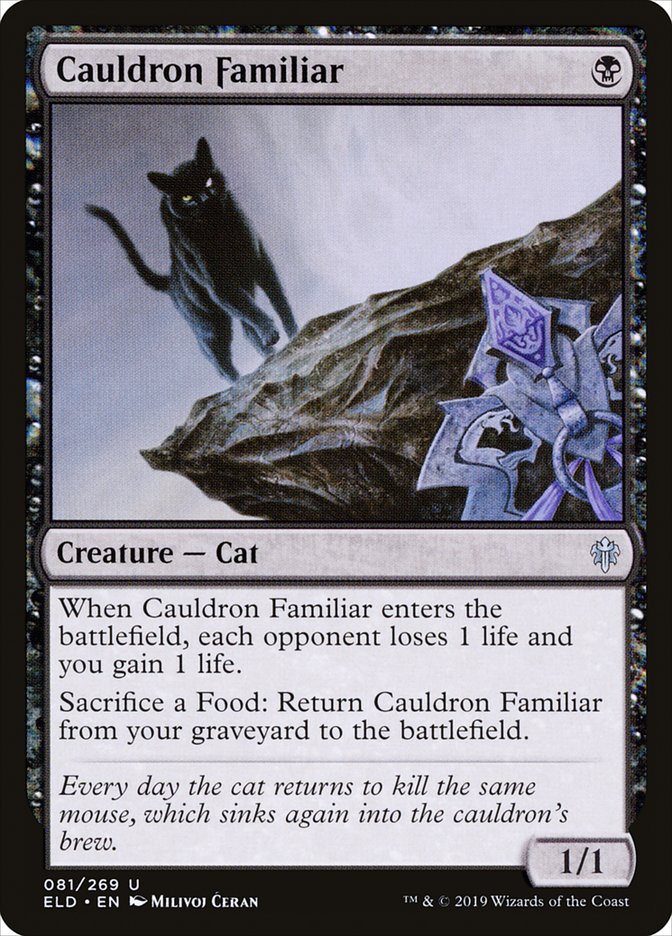
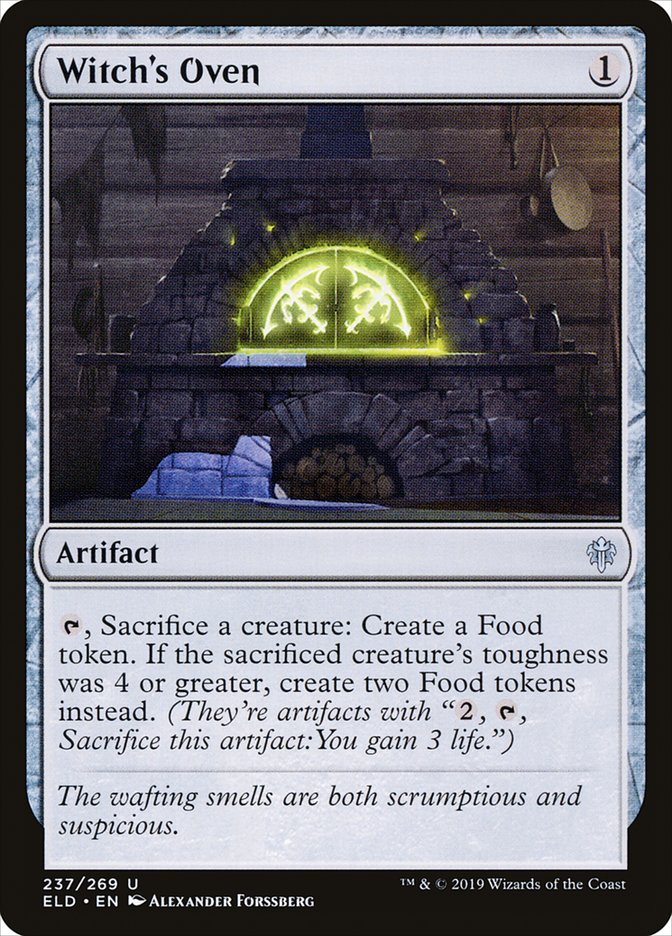
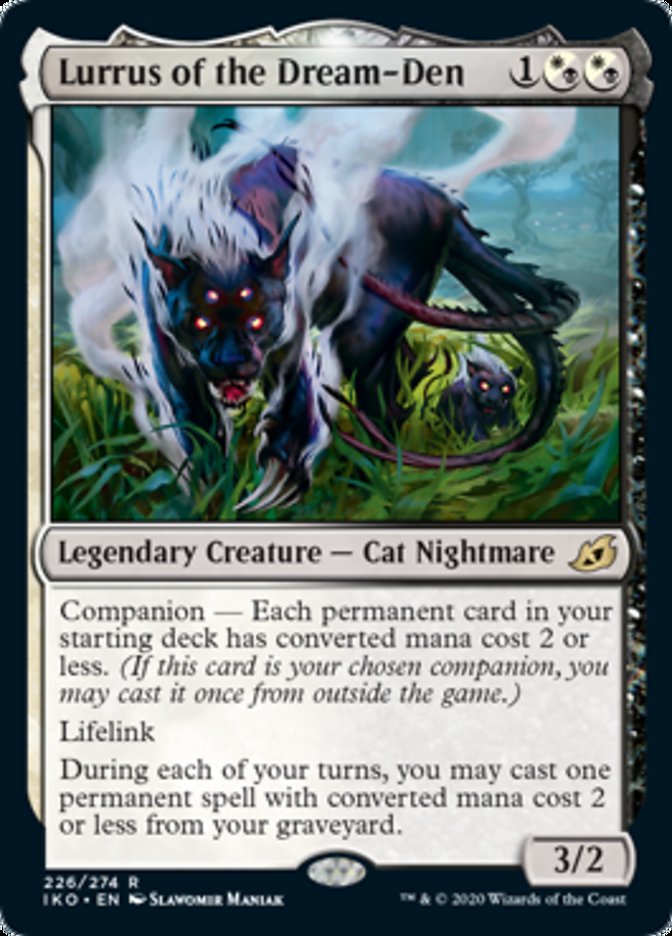
When I see a deck using the cat/oven synergy of Cauldron Familiar and Witch’s Oven, I will consider that a “meta” deck, as those two cards form the backbone of a variety of different decks that use sacrificing their own permanents as a means of winning the game. I’ve played against decks that use the Familiar without the Oven, and decks that run Oven without the Familiar, and I wouldn’t consider such decks meta decks based purely on the presence of one card or the other. It’s the combination of the two that matters. How a player builds around those two cards can vary significantly, and the resulting power level will therefore vary as well, but it’s very rare to see a cat/oven deck that doesn’t run some combination of a specific subset of cards: Mayhem Devil, Priest of Forgotten Gods, Nightmare Shepherd, Lurrus of the Dream-Den, etc.

Can a player build a non-meta cat/oven deck? I suppose, though I don’t know that I’ve personally played against such a deck. Every time I see cat/oven, I can reliably predict a large portion of the rest of the deck, based on the colors being played.

Similarly, Fires of Invention decks are currently taking a variety of forms, but they all employ the same basic strategy: play a turn-4 Fires whenever possible, and then start dropping large threats that cannot be easily answered. I’ve seen at least half a dozen substantially different Fires builds in the “Play” queue, and all of them were meta decks in my eyes. Undoubtedly their power levels were not equal – some would assuredly not have been considered tier 1 builds – but all were capable of explosive play that most casual decks couldn’t hope to match or answer.

You like crushing opponents with this card? Then I hate you.

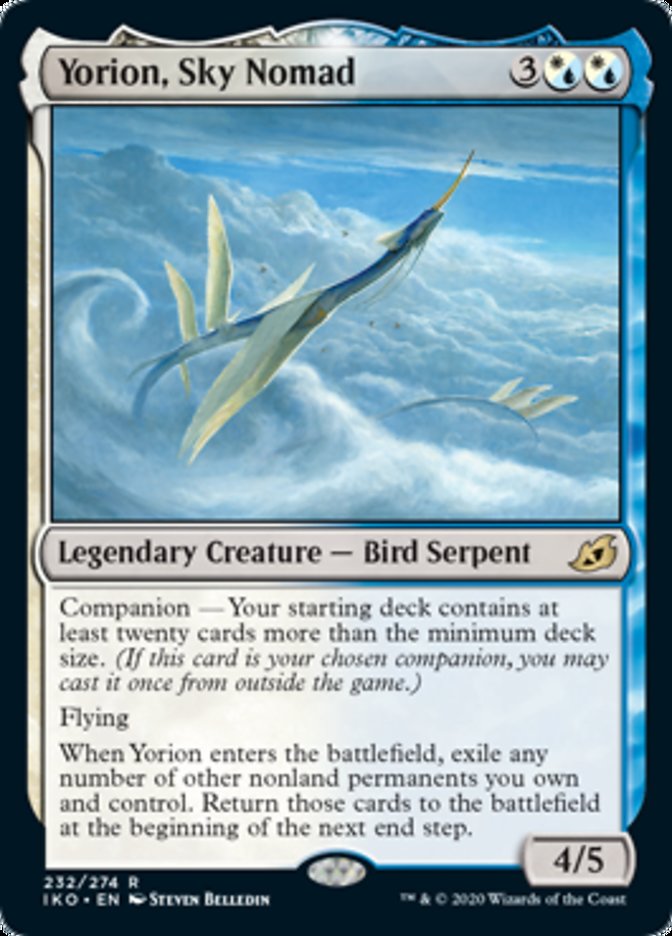
A final example I’ll quickly mention: Yorion, Sky Nomad decks. There are highly competitive versions of these that are decidedly tier 1, but I’ve also faced a version in the “Play” queue that resembled an 80-card pile of draft chaff with no discernible synergy with Yorion itself. I don’t consider any deck with a Companion, or running a single good card, a meta deck.

With that established, let’s return to the original query:

  • Why run a meta deck in the Arena unranked “Play” queue?

Answers I have seen people give to this very question:

  1. They’re trying out a new deck
  2. They’re testing changes to an existing meta deck
  3. They’re practicing with a meta deck before taking it to the ladder
  4. They’re running a subpar version of the meta deck
  5. There’s no rule that says you shouldn’t
  6. Playing in the ranked queue is stressful (or anxiety-inducing, or unfun, or uninteresting)
  7. Winning is how they have the most fun
  8. They’re trying to meet their daily quests as quickly as possible

The first few are the most common replies, though it should be noted that people who actually engage in the meta-decking behavior don’t tend to answer the question. The replies are almost universally from people who appear to be speaking for others and are likely postulating.

Number 8 is also a relatively common refrain – though again, few people admit to doing it themselves. But I have seen a few people own up to playing tier 1 decks in the unranked queue in order to rack up quick wins. All of this is – let’s be honest here – quite sad. Sad that Arena encourages it by doling out most rewards based on daily wins. Sad that the rewards – which diminish rapidly after the first 5 games – are reason enough for people to engage in the behavior. Sad that people just trying to have fun and fair battles are so frequently subjected to such mismatches.

My search for cards referencing “fair” or “even” turned this up. Is it relevant? No. But it was too damn funny not to use.

The most common advice to players looking to play “for fun” who get matched up against a meta deck? Insta-concede and try your matchmaking luck again. You aren’t “out anything” by doing so, people often claim.

Personally, I frequently wait 45-60 seconds to get matched to an opponent, who sometimes then take another 30-60 seconds to decide whether to mulligan or not (or they simply queue up for a game and watch Netflix until they realize they missed being matched.) And after all that, it can take anywhere from a 1-drop to 4-5 turns before it becomes apparent the opponent is packing a meta deck. All told I may have spent 2-4 minutes just establishing that the game of Magic my opponent wants is not the Magic game I’m seeking.

Now imagine that scenario 3-4 games in a row. That’s not an inconsequential amount of time to spend looking for a “fair” game of Magic.

While I could possibly understand reason #6 – ladder anxiety or simply a lack of desire to “grind the ladder” – I haven’t actually seen anyone claim this as why they, personally, play their meta decks in unranked queue. It’s just another supposition made by those either attempting to understand the practice, or who do it themselves but won’t admit to it and frame their answer as someone else’s behavior.

If someone is afraid or anxious about playing for the very limited stakes involved in ladder play, I’d love to see a thoughtful explanation of their resultant choice to take a deck meant for competitive play into a room with no rewards beyond daily quest progress.

Honestly – I would guess that reasons 7 and 8 account for 95% of the behavior I’m examining here. And I have even seen a couple people admit to using the unranked queue to pile up daily win rewards as quickly as possible. A tier 1 deck is going to find little resistance, and some number of instant or fast concessions, in the “Play” queue.

(Not that that would explain people playing disturbingly slow yet powerful control decks in “Play” – I think that’s a case of someone who just enjoys bullying weaker opponents.)

If you like to pubstomp casuals, at least play aggro and end it quick

I did even see someone respond to the “why meta deck in the unranked queue” question with this blunt (and perhaps not entirely genuine) answer: “I like to beat up on new players.” Though I would obviously not condone the behavior, I actually hope that person’s answer was truthful. At least that would be a tiny glimmer of courage from someone otherwise engaging in cowardly behavior.

I think a substantial amount of the pubstomping is intentional, and some not-insubstantial amount of it is malevolent. I’ll grant that some people just want to win (winning is fun!), and they simply lack the empathy to consider the faceless opponent they’re crushing. It’s easy to forget that you are, in fact, playing another human and not an AI opponent.

Others, though, are almost assuredly laughing as they steamroll someone running a Welcome deck or a bunch of draft chaff they cobbled together. I used to harbor a faint hope that meta-deck players who win via frequent fast concessions would feel a little guilt or shame and modify their behavior. Now I believe that simply doesn’t happen. Very few people who are pubstomping admit to doing it, and those that do tend to hide behind one of the first 5 responses listed above.

Outside of direct matches with friends (which, unfortunately, don’t reward progress towards daily rewards), there’s little a casual player can do but concede to meta decks and try their luck again. That it comes to that is both unfortunate and frustrating.

If Arena’s matchmaking was worthy, such match-ups wouldn’t happen in the first place. And, perhaps, meta-decking players matching up with their doppelganger in the “Play” queue might tire of such failed attempts to pubstomp and just play ranked (or explore less clearly competitive decks.)

And if Arena’s reward system wasn’t largely based around daily wins, competitive players might stick to playing the ladder. Or they might just try piloting less powerful decks.

Winning is, of course, fun, and some number of players will always elevate that goal above all else. And there will always be players intentionally and happily willing to ruin someone else’s fun in the name of their own. I honestly think Arena could address some amount of this, if they felt it a worthwhile effort. Thus far, it appears they don’t.

I’ll wrap up my initial look at Middle Class Magic on Arena by taking a closer look at pubstompers (and other player types.)

Middling Magic Matchmaking

May 5, 2020

tryhard – noun : a person who is perceived as putting too much effort into something recreational, such as a game

0-12

That’s how my evening on Magic Arena started.

Twelve best-of-1 games in the unranked “Play” queue with my favorite Mardoom deck. Twelve losses, all of them solidly bad, all in a row.

‘Twas my own doom foretold

Was I pissed? Honestly, no. Was I annoyed? Oh, hell yeah.

So why wasn’t I saltier? Losing twelve straight games to begin my evening, with a deck sporting a historical win percentage of 50.52% (according to my chosen Arena plugin), was startling.

Admittedly, twelve losses in a row is hardly unprecedented. But I’d lost several games to mana screw and one to color screw, while I don’t believe any of my opponents missed multiple land drops in a row or were without one of their colors for a large stretch of a game. Obviously I don’t know what my opponents might have struggled with in those twelve games. I just know they all bludgeoned me.

Artist’s rendition of me at 0-12

I faced 4 mono-red aggro decks, which stomp my Mardoom deck – all of my decks, honestly – into gelatin. I also got trashed by two Lurrus Companion decks, which were far, far too fast for me to cope with. I was smacked with targeted discard by 4 or 5 of the decks, leaving me to grumble as key pieces of my deck were stripped from my hand before I could cast them. T3feri, Nissa, Ashiok, and Liliana all gave sterling performances against me. And the gods – Thassa and Heliod – shined (frowned?) upon me.

It was a perfect storm of rugged opposing decks, strong starts I couldn’t handle, protagonist deck failures, and rotten stinking luck.

And through it all, getting pretty annoyed around loss 4…I slogged along, sure that my deck and my skill were NOT this poor. I needed some luck, perhaps, or a favorable match-up, but I was sure a win would come.

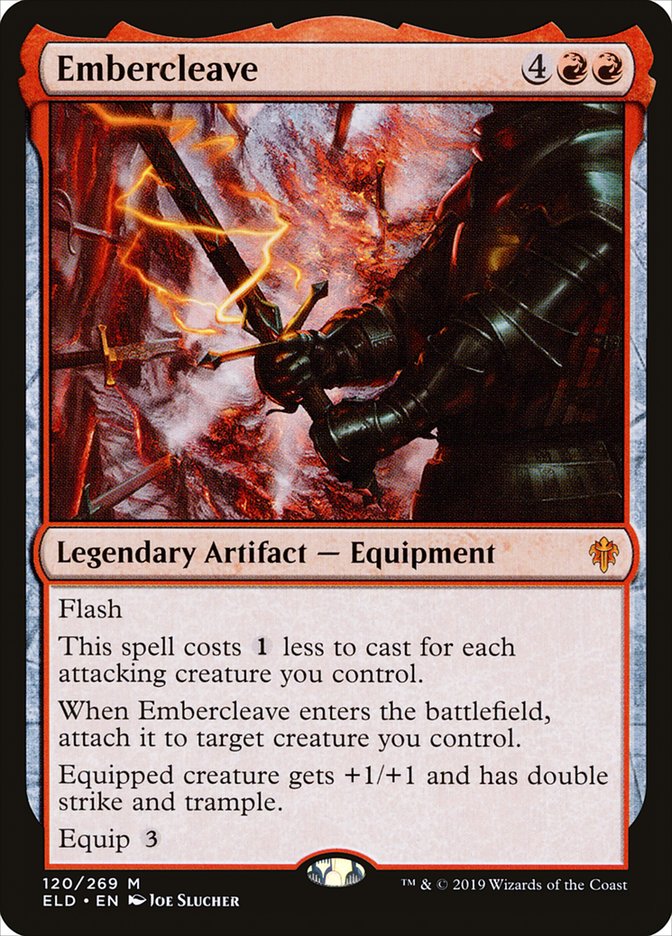
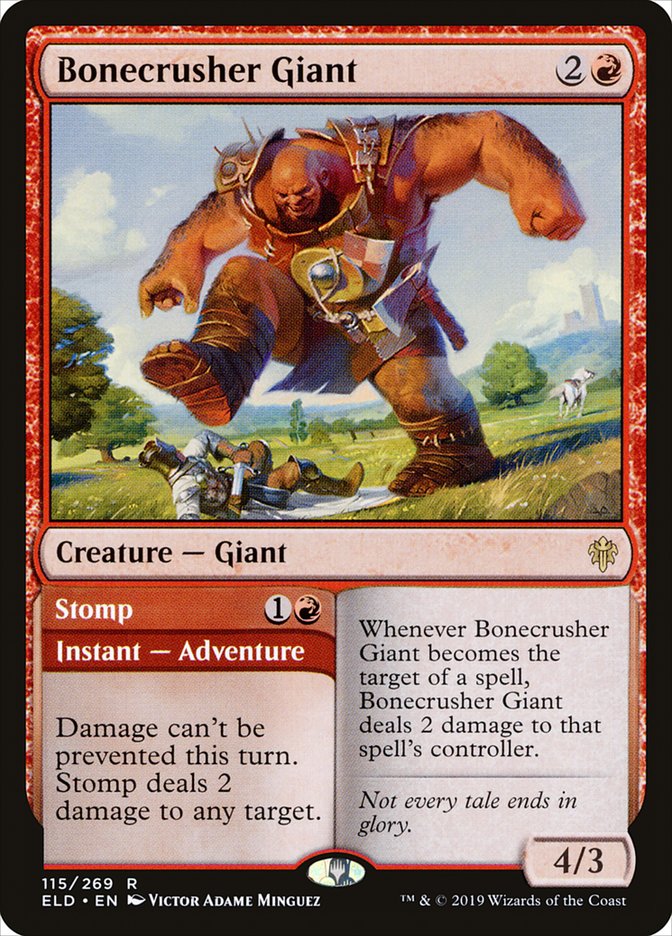
Opponent 13 was playing a relatively strong Gruul beaters deck with Gruul Spellbreaker, Bonecrusher Giant, Klothys, God of Destiny, Domri’s Ambush, and the almighty Embercleave. It was a struggle – momentum swung to each of us multiple times – and I won despite getting clubbed by a ‘cleaved Giant late.

I might’ve pumped my fist, or whispered a “woohoo”, or sighed with relief. I don’t recall. Being 1-12 sucks, but I still relished that win.

Several games later I suffered through a stretch that saw me matched against mono-red aggro 4 out of 6 games. More pummeling ensued, as did my annoyance.

Still, there was no significant salt. No cursing. No aggravated fist-clenching. No middle fingers flashed at the monitor (come on, you know you’ve done it to that opponent who blew up your board and emoted “Oops” and then “Good Game”.)

I’ve always been pretty mellow when it comes to Magic, but I’ve found myself getting irritated with my Arena experience at times. Thus I’ve been half-heartedly working on improving my Magic mindset: absorbing tough losses with more grace, better appreciating quirky decks or smart plays from my opponents, and accepting stompings with little more than a shrug. But looking over my Arena plugin’s match log from tonight’s games, a different emotion awoke.

Disappointment. Not at going 0-12. I’m chalking that up to an ugly stretch and nothing more. No, it was disappointment at the conglomeration of factors contributing to that 0-12.

I narrowed those factors to the following:

  • Arena’s questionable matchmaking
  • Meta decks in the unranked queue
  • Quality players pubstomping for rewards

These issues are largely entangled, so addressing one will undoubtedly touch on the others, but I want to look at them separately. I’ll begin with matchmaking.


No one except Arena’s developers knows exactly how matchmaking in the “Play” queue works. And frankly, I’m not convinced the devs really understand it. Because if they do, then one of these scenarios is true:

  1. They think repeatedly matching up jank with meta decks (tier 1 or 1.5) is fair
  2. They know repeatedly matching up jank with meta decks is not fair, but they accept it as a valid matchmaking result
  3. They know repeatedly matching up jank with meta decks is not fair, but they can’t design a matchmaking system that prevents it

None of those scenarios being true is encouraging.

Yes, I’ve taken some liberties here, and I’m going to address those now.

First: “fair”. Save me any squawking about how “it’s fine – life isn’t fair!” These are unranked matches in an online card game – finding reasonably balanced gameplay is not an unreasonable ask.

An unreasonable card, but not an unreasonable request

Matchmaking in the unranked “Play” queue supposedly uses some hidden system of card grading and comparison – if your deck uses cards known to be “strong” or “meta”, your deck will get matched up with other decks that also use such cards. I’ve never seen anything more specific than this, but I’ve seen people recommend (to myself and others) removing things like rare lands or strong removal cards from otherwise janky decks to try and reduce a deck’s “meta footprint” and hopefully improve matchmaking. And by “improve”, I mean increase your odds of facing a deck with a similar power level to your own.

My own anecdotal evidence is that nerfing your own deck makes no difference. I gave up trying to “power down” some of my lousy decks many months ago when I saw no evidence that doing so modified matchmaking.

Lousy card and a lousy deck-building strategy

For spits and wiggles last fall I tried taking a Pauper deck (commons only, if you aren’t familiar with the format) that I’d used for an Arena Pauper event into the “Play” queue, and it was regularly matched up against all manner of meta decks popular at the time.

Obviously I didn’t expect to get matched up against other Pauper decks, because no one else was likely playing one. But why not a match-up with one of Arena’s 10 free welcome decks? That seems like a better fit, power-level-wise, than a meta deck. I know some number of players are using the free welcome decks, or modified versions of those decks, at any given time. When my daily quest is to cast a certain number of spells for a color combination that I haven’t built a deck for, I will use the 2-color welcome decks myself. When I do so, though it’s not frequent, I sometimes get paired up against someone else playing a welcome deck or what appears to be an upgraded welcome deck.

The most dreaded of Arena’s color challenges

Even worse, some of my middle-tier decks get matched up against people playing welcome decks. I never enjoy that experience, and have honestly pulled some punches in such games. Obliterating a weaker opponent is not an experience I enjoy. I’ve seen arguments that such games serve as learning experiences for new players. “Oh, you got stomped? Improve your deck! Learn how to bait out counterspells! Discover why you don’t over-commit to the board! See how REAL decks are built!”

I understand – anyone that plays Magic for more than a few days is going to lose – a lot. Especially on Arena. Even when a new player is paired up against someone with a deck of similar power level to their own, the more experienced player will make fewer mistakes and better choices. I’d been playing Magic for 20 years when I started on Arena, and I lost – a lot. Partially because my decks sucked, and partially because my decision-making needed the kind of overhaul that comes with repetition. Even still, in the beginning I’d have loved what I think most players want when they queue up for an Arena game:

A reasonably fair fight.

To be clear: you bring jank to a tournament, you (should) expect to get shellacked. And you will. And you’ll learn never to do that again, unless you enjoyed the shellacking.

The “Play” queue on Arena, though? With supposedly some form of deck-based matching? Meta vs. jank should not be the default. Better – much better – has to be possible.

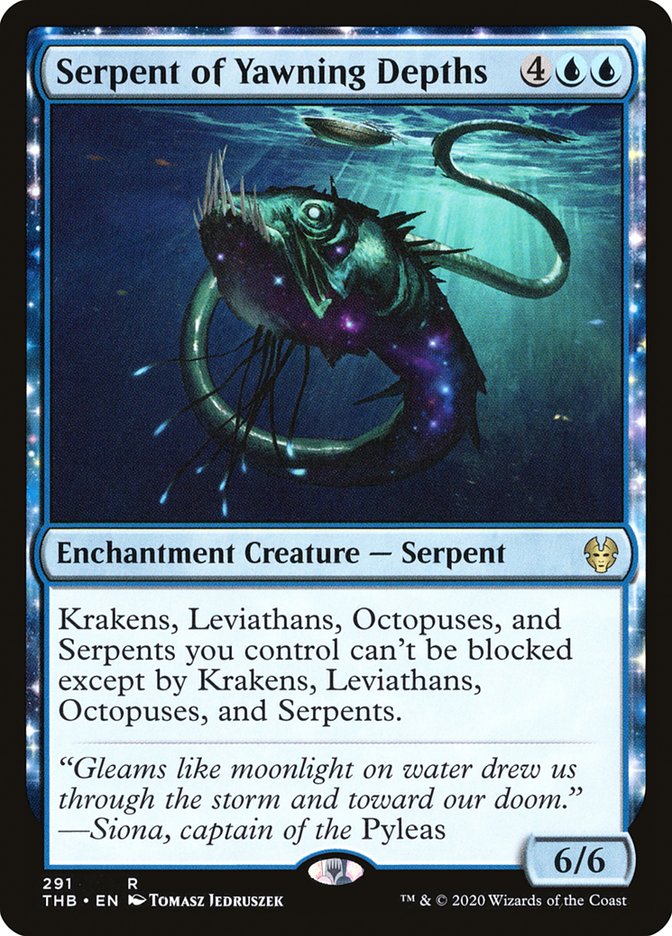
I watched a streamer that specializes in full-on jank take a deck based around Serpent of the Yawning Depths into “Play” and get matched up repeatedly with top-tier decks. His deck featured no counterspells, no planeswalkers, no significant removal, and a plethora of subpar creatures…and he was matched up with the likes of Bant Uro, mono-red aggro, etc. In what universe is that valid matchmaking that uses relative deck strength in its calculations?

Tryhards are going to play their meta decks in the unranked queue. Arena, by doling out rewards for the first 15 wins each day, incentivizes such behavior. And I’ve seen dozens of players defend the practice by claiming they’re “practicing” or “brewing” or “trying something new”. Short of removing daily rewards for wins, it’s going to continue for as long as the “Play” queue exists. Considering the sheer volume of players doing this, however, a matchmaking scheme that pits such players against each other, and not people hoping for a jank battle, would better serve everyone (except for the pubstompers who want to rattle off quick wins against subpar competition by taking advantage of Arena’s transparently crap matchmaking.)

If you want to play WITH a meta deck, you should be willing to play AGAINST a meta deck. If you want to play with something lesser, there should be a viable option to find someone with the same mindset without resorting to discord servers or Facebook groups dedicated to helping casual players find each other.

My middling Mardoom deck is going to stomp Welcome decks with virtual impunity – it shouldn’t get paired with them in the unranked queue. And it folds, with regularity, to tier 1 meta decks – it shouldn’t get paired with them in the unranked queue either. If I want to get pummeled, I’ll head to the ranked ladder. If I want to pubstomp, Sparky is a willing participant.

Sparky – willing participant in your pubstomping fantasies

I may be (read as: probably am) an aberration, but my favorite games are not the upsets I pull off against stronger decks. Those really only happen when my opponent’s deck misfires or I face someone who clearly isn’t sure how their copy/pasted meta deck is supposed to function. It’s still fun when it happens, but it’s a muted victory in my eyes.

No, my favorite games are hard fought, back and forth contests that last 10+ turns and come down not to whose bomb couldn’t be answered, but who made the right choices. If that can happen while staring down a deck that uses tier 2 cards/strategies, or a deck that doesn’t play out in a truly predictable manner, the reward is all the greater – win or lose.

Arena veterans know that as long as daily wins are among Arena’s primary rewards, the “Play” queue will positively brim with tier 1 strategies and spikey players. And players like myself will continue to have our jank annihilated frequently, or will resort to auto-conceding at the first sign of a deck and/or player whose goal is clearly to prey on the weak.

It just shouldn’t be that way.

Middling Magic – An Introduction

May 1, 2020

engagement – noun : emotional involvement or commitment

In a previous post I briefly mentioned a concept I am going to start exploring over the next few months: “middle class Magic.”

No, not the format.

Wait, you aren’t familiar with the format? The weird, uncommons-only sibling of Pauper, that no one plays?

The oldest reference I can find to the format is 2010, but I didn’t do an exhaustive search. I came across it simply because I wanted to see if the phrase “middle class Magic” is, as a basic concept, already linked to something or someone.

And it is – to a format that has existed for at least a decade, and a small handful of people appear to have tried to get off the ground a handful of years ago. I found a few articles and some YouTube gameplay for the format, but it’s clearly never won many hearts or eyeballs.

I don’t see any recent attempts to grow the format, and the phrase “middle class Magic” is likely not in the vernacular of the vast majority of players. Still, did I want to co-opt the term for a concept I plan to weave in and out of my content going forward?

I suppose not.

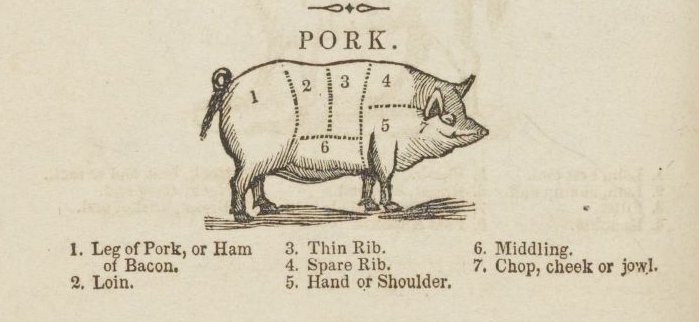
So I have, instead, decided to use a term synonymous with a side of bacon: middling.

The font betrays how long ago “middling” was used in reference to pork

Alright, so a cut of pork shoulder is not the parallel I’m attempting to make, or the one I’m expecting you to have.

From a personal standpoint the following is a closer definition:

“lacking exceptional quality or ability”

I’ll give you a moment to let the obvious jokes about my blog and overall writing ability play out in your brain.

Done? No? OK. I’ll wait.

Flavor text after my own heart.

We good yet?

As I started blogging, I started thinking about my level of engagement with Magic. How does that level of engagement inform my time with the game, and my writing? I came to the conclusion that I (and I believe many other players) exist in a nebulous “middle class” of players – people who love the game and spend a lot of our money and/or time on it, but aren’t intrinsically linked to it.

So what does it mean to be a “middling” Magic player? And bear in mind I’m speaking strictly about player engagement with the game, not play or deckbuilding skill.

Like the middle class of society, trying to build a singular concept for a huge number of individuals is a fool’s errand. I make no claims to being smart enough to adequately define such a varied group of players. For now, I’ll just make the claim that I’m part of what I consider the “middle class” engagement group.

Why am I looking to group players into tiers based on their engagement with the game? Aren’t there already lots of ways Magic players are grouped (pros vs. scrubs, casual vs. competitive, Johnny vs. Timmy vs. Spike, constructed vs. limited, etc.)? I think my purpose is to clarify my own voice, which I think will help me better express that voice. Who am I as a Magic player, what do I want out of the game, and what do I hope to say about it through my inane ramblings?

Struggling to find visuals for this post!

For polling purposes, American society generally gets divided into 5 classes: upper, upper-middle, middle, working, and lower. Other systems sociologists employ use 6 or 7 classes, with groups such as “upper-upper”, “lower middle”, or “working poor” being added or substituted. I personally like the 5-tier system, mostly because it’s easier to lump people into 5 groups than 6 or 7. I even contemplated a 3-tier “engagement” system for my groupings of Magic players, but like the original Magic psychographic profiles – Timmy, Johnny, and Spike – three is likely too few categories to fully capture the breadth of Magic engagement levels.

Here is where I strongly emphasize that by using terms like “middle class” or “lower class”, I am making no value judgments about a player. While my play skill may be superior to many “lower” or “working” class players, and I may spend far more of my time and money on the game than those players, I am NOT a “better” Magic player, by any measure. I, as stated above, “lack exceptional quality or ability” when it comes to Magic. I am “middling” purely based on my engagement with, and investment in, Magic.

That said…by virtue of writing a Magic blog, I think it’s safe to say I’m in the “upper middle class” of players when it comes to engagement with the game. Content creators as a whole are probably all upper-middle class or upper class players.

I do not, and never will, make any money (let alone a living) off of the game. I don’t play it at its highest level, or make the sort of professional-level content only a handful of people do. Magic is only one of several interests that scrape away at my leisure time. I’m not a frequent poster on Magic-related subreddits, and I don’t spend much time at an LGS. I’m most definitely not among the Magic community’s most engaged players.

But the game is important enough for me to write about it, read about it, watch streamers and content creators on YouTube and Twitch, and spend a decent chunk of my disposable income on it. Heck, for nearly three years I volunteered for the Magic Online Adept program, filling one of the least desirable time slots available.

So…what does all that mean (if anything)?

If you’re reading this, you are likely aware that the vast majority of Magic players have substantially limited engagement with the game. A rather small percentage of players spend any time at all reading about it, posting about it, watching it, or creating content around it. So middling Magic players are, unlike a society’s middle class, not a majority. I think a lot of the content found online comes from purely upper-class players (again – these are not necessarily the BEST players, just the most invested.) Most Magic content – be it articles posted on popular online store websites, discussions on Reddit, or videos on YouTube – revolves around a couple basic premises:

  • Competition (ex: strategies or decks to use if you want to win)
  • Optimization (ex: how to improve your deck or your skills so you win more)

THERE IS NOTHING WRONG WITH THIS. People like to win, winning is fun, and consistent winning requires improving aspects of play – deckbuilding, sideboarding, threat assessment, lines of play, etc. I am not, in any way or on any level, criticizing content that focuses on winning games of Magic.

But I, personally, am interested in more than that. As my previous post history has hopefully made clear, I enjoy telling stories, sharing experiences, and examining the lighter side of Magic. One of the reasons I started writing about the game is what I perceived as a dearth of such content (that’s not to say that it doesn’t exist; it just isn’t as plentiful as I might like.)

When I post about “middling Magic”, my goal will be to present a topic or experience from a viewpoint I feel is somewhat under-represented in the online Magic ecosystem. Which leads me to…

Next time: Arena matchmaking from a middling point of view.

Trading Gold For Salt

April 22, 2020

lemming – noun : a person who unthinkingly joins a mass movement, especially a headlong rush to destruction

Last Thursday, the day Ikoria: Lair of Behemoths became available on Arena, I shoveled 100,000 gold into the store and walked away with 100 packs of the new set. As someone who has been opening boosters for over 20 years, I don’t know that I’d ever been so excited to open Magic boosters. Which, let’s be honest, is a little sad, seeing as how these are “virtual” cards that will disappear into internet vapor the day Wizards shuts down the Arena servers.

But Arena is the ONLY way to enjoy Ikoria currently (in North America, at least) and it’s nearly my only way of playing any form of Magic. When you only have a little, make the most of it, right?

I’d looked at the spoilers, read discussions about many of the new IKO cards, and read much of the “official” Wizards Ikoria propaganda. Call me impressionable, call me susceptible, call me a sucker…but I was ready to buy what Wizards was selling. Figuratively AND literally.

An Arena chump and his gold are soon parted…

OK, I wasn’t going to be spending any actual cash, thanks to my Arena gold stockpile. Still, I was ready to empty my Arena pockets for whatever was inside Ikoria.

Artist representation of me on Arena, pre-Ikoria

Arena allows you to open packs individually or 10 at a time, and I stubbornly went the former route. I decided to revel in each pack – re-read the cards, peruse the art, and – for purely scientific (i.e. blogging) purposes – log the results.

This was done Thursday evening, after my wife had gone to bed and my kid was lost in the warm glow of his cellphone screen.

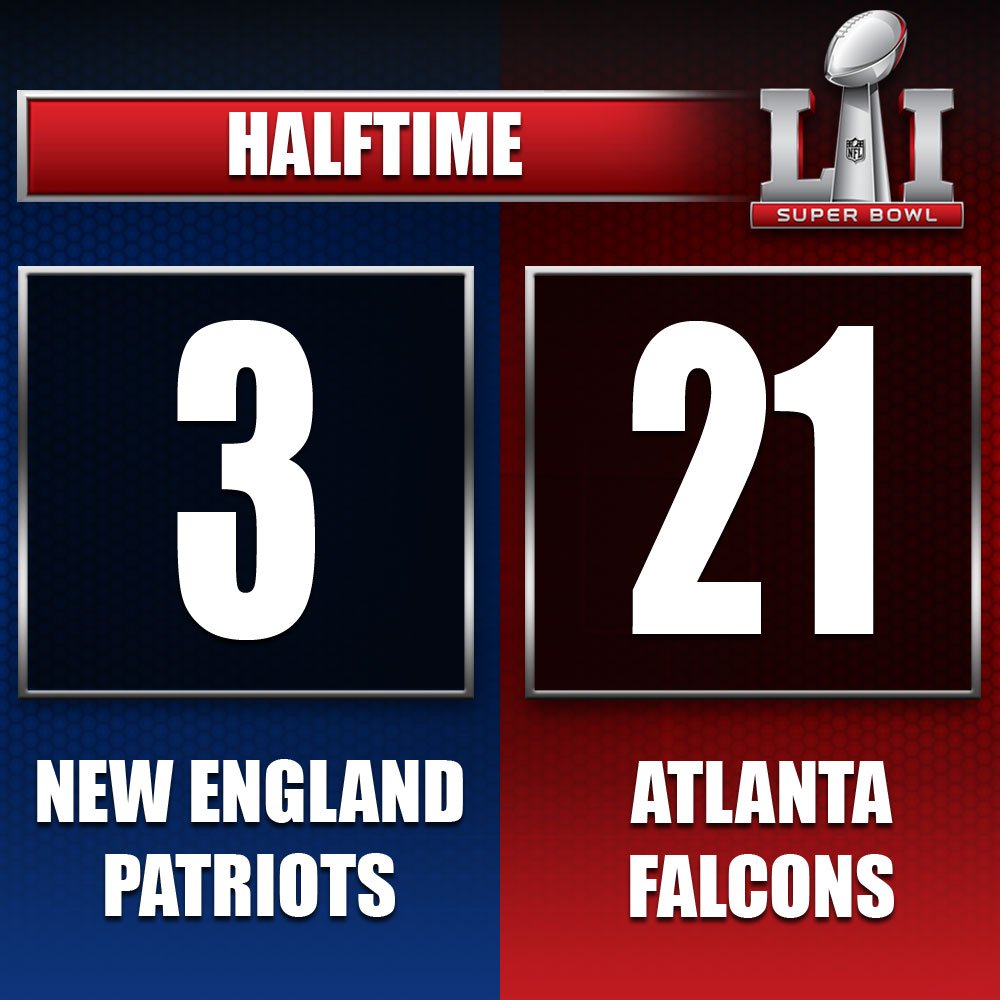
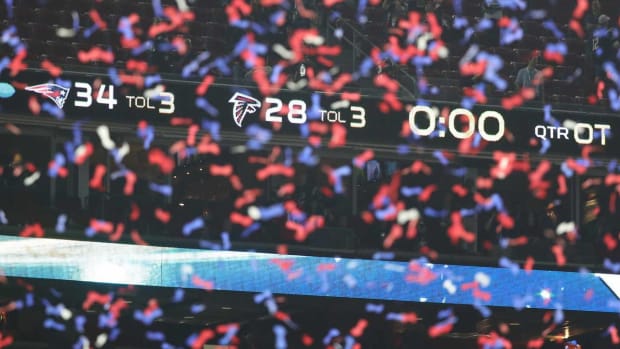
Fifty packs later, I gave up. Partly because it was 11:00pm, and partly because I felt utterly defeated. If this had been the Super Bowl, I would have been the Patriots in the first half of Super Bowl LI:

Remember this? If so, I’m sorry.

At halftime, things looked bleak for the Patsies. As they did for my pack stash. Let’s check the replay…

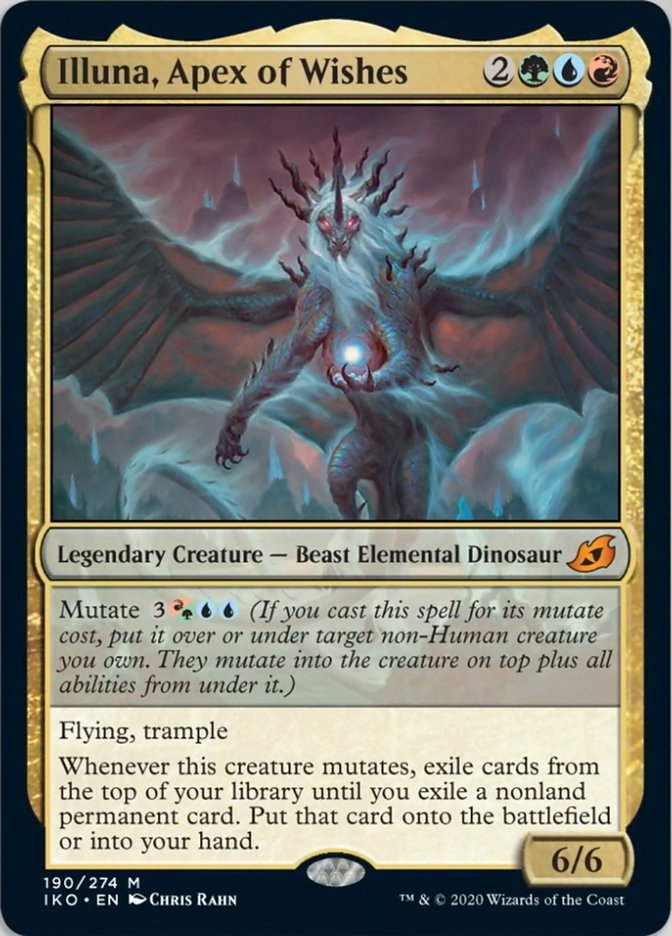
The odds of opening a mythic in a pack on Arena (as well as in paper) is about 1 in 8. So 50 packs in, I should have seen 6 mythics. I’d opened 3 – two mythics from IKO, and a pack that contained a mythic wildcard. My first mythic, in pack 6, was this bad boy (girl?):

The beard says boy, but the eyes say girl

Pack 22 was a mythic wildcard, and pack 26 contained a Chevill, Bane of Monsters. After that…24 packs without a mythic.

To be fair, Magic isn’t just about the mythics (I suppose) so how about my rares?

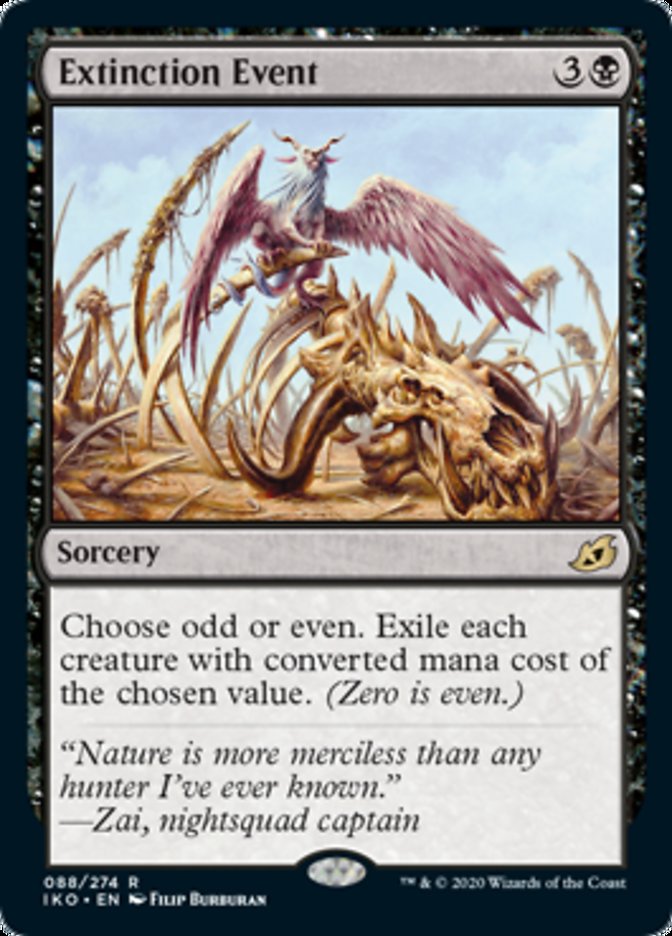
In 50 packs I’d already gotten playsets (4 copies) of Extinction Event (a card I’d have been thrilled to never open a single copy of) and Yorion, Sky Nomad (I was ambivalent about this.)

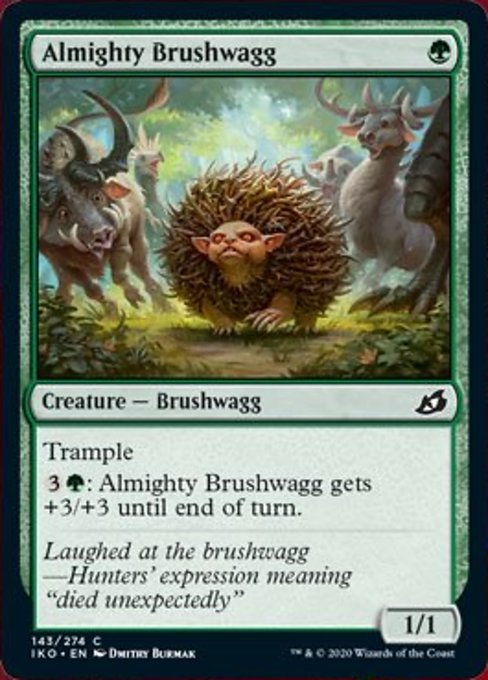
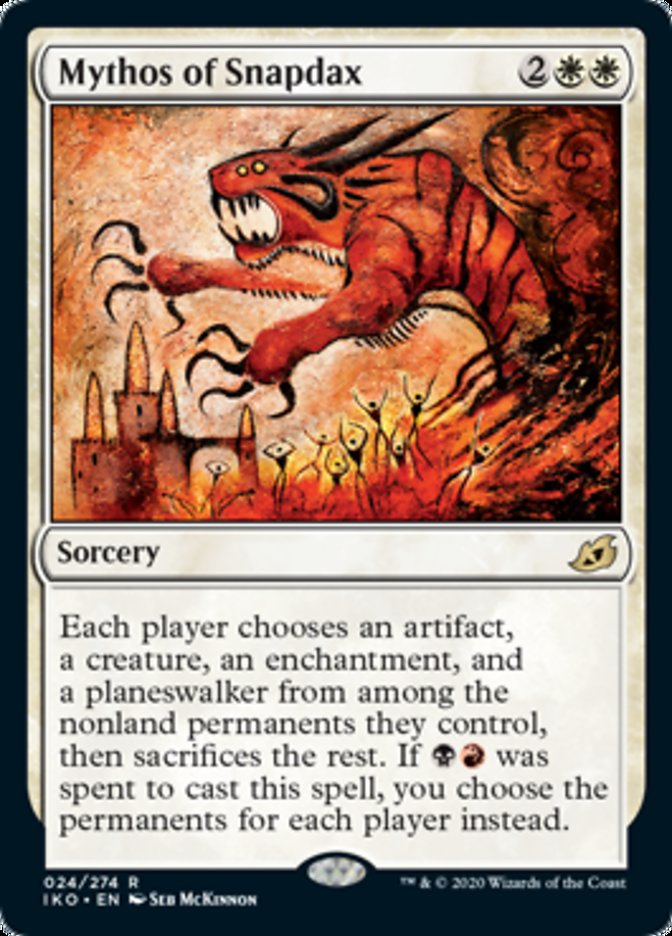
I’d also opened 3 copies of Mythos of Snapdax (all within 7 packs of each other) and two copies of 6 other rares. Nine different rares accounted for the rare/mythic slot for 23 of my 50 packs. So…hardly any mythics, little variety in my rares, and only a couple copies of cards I was eager to build with/around. And I’d yet to even open a single Almighty Brushwagg (not that this mattered – I had over 100 common wildcards – it was just salt in the wound.)

I closed Arena and slunk dejectedly to bed, truly feeling like the King of Bobo Rares.


Sleep came easy, as it usually does for me, but I awoke strangely early, at 4:00am. Unable to fall back asleep, I lay in bed pondering the first half of my pack cache. A lot of questions swirled.

  • Had I really been so unlucky?
  • Did it really matter how many mythics I opened?
  • Did I really even need specific rares or mythics to brew with Ikoria?

The answers to all of these questions came back…”yes.”

But…

But

I still had 50 packs left. That’s significantly more than a standard paper booster box (36 packs per box.) And all 100 packs had come free, thanks to months of Arena grinding (which, honestly, I had largely enjoyed.)

Could the second half of my packs be just as putrid? Of course.
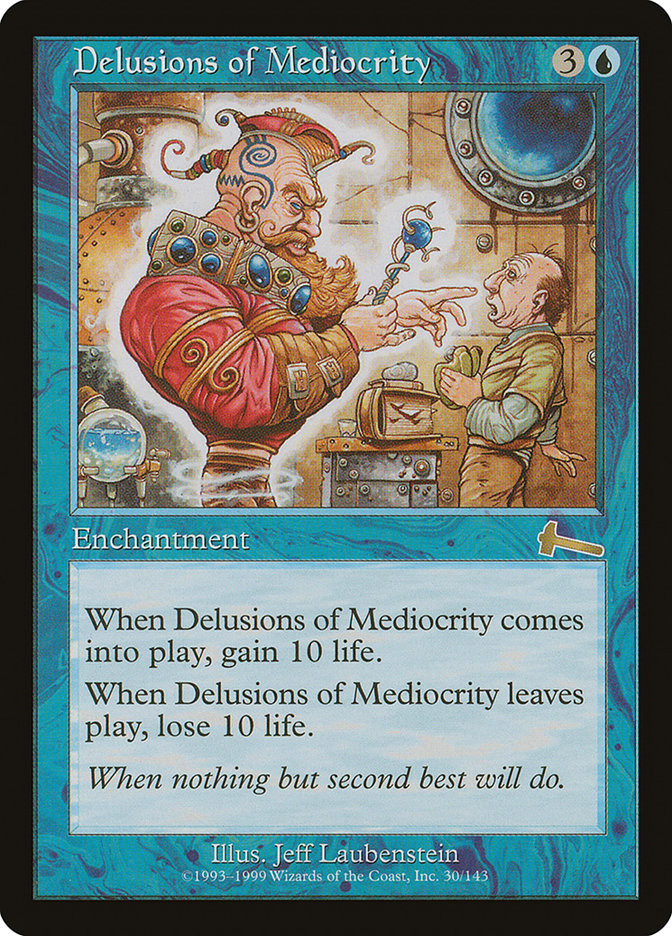
Was that likely? Maybe.
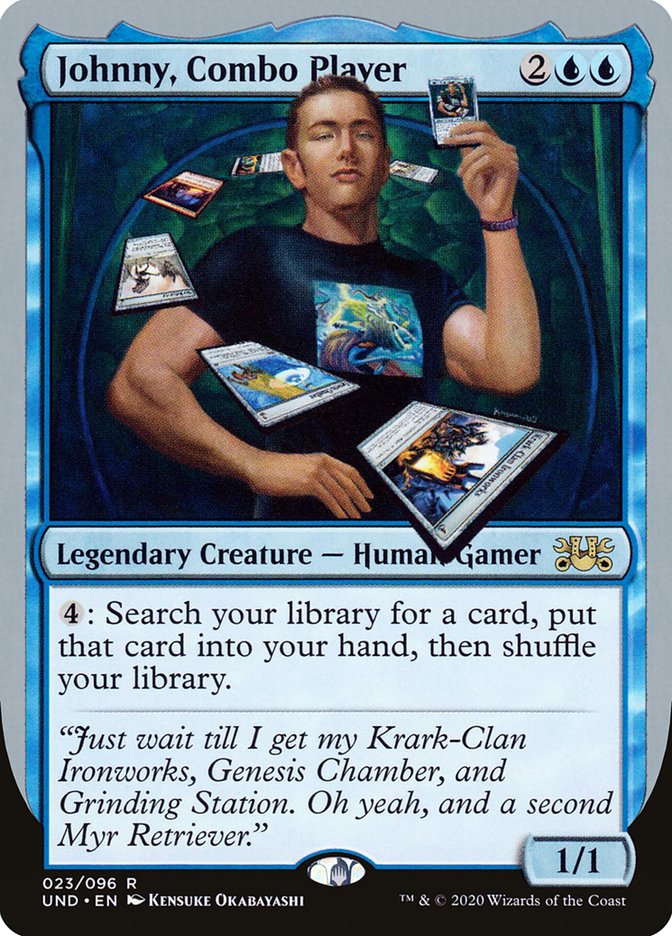
Did it realistically matter in the great, grand scheme? I suppose not.

Friday evening I returned to Arena feeling refreshed, even optimistic.

If the first 50 packs had been the equivalent to the Patriots’ first half of Super Bowl LI, the other 50 were the Patriots in the second half.

If, like me, you’d desperately tried to block Super Bowl LI from your memories, you may not remember that the Falcons held a 28-3 lead late in the third quarter before collapsing in hilarious (or hilariously hideous) fashion and losing to the Patriots in overtime.

Unforgettably forgettable.

You know what? I hate the Patriots. I don’t want to compare any of this to them anymore. And the greatest second-half comeback in NFL history involves the Bills overcoming a 32-point deficit to beat the Oilers, the team that I’d loved as a kid while growing up near Houston.

Apparently finding a better sports reference is hard.

Baseball games don’t really split neatly into halves, and the greatest second-half season comeback in MLB history belongs to the Yankees, so I refuse to reference that.

Gotta dig deep…

Oh! I’ve got it! My second half was like Red Rum coming from 15 lengths back to beat Crisp in the 1973 Grand National steeplechase.

NOW you assuredly understand. Yes, those 50 second-half packs were 1973 Red Rum good!

If ever there was an athlete to aspire to be…

After an Obosh, the Preypiercer in pack 51, I opened a Vadrok, Apex of Thunder in pack 52 (and two more in packs 79 and 93), a General Kudro of Drannith in pack 58, a Rielle, the Everwise in pack 60, a second Chevill in pack 75, two Vivien, Monsters’ Advocate in packs 76 and 89, a Lukka, Coppercoat Outcast in pack 80, a Kinnan, Bonder Prodigy in pack 91, and a Winota, Joiner of Forces in pack 96.

Eleven mythics in 50 packs (actually, in 44 packs, since they all came between packs 52 and 96.) That’s not even counting two packs with mythic rare wildcards in packs 73 and 97. That’s…pretty spectacular.

The second half rares were not quite as spectacular as the mythics, but I got fewer duplicates (not counting 4 copies of Colossification in a 20-pack stretch). I ended with at least one copy of all but 6 mythics, 10 rares and 7 uncommons. It took until pack 98 to get at least one of every common, but I the Raking Claws in that pack completed the IKO commons.

I got 4 copies of 3 different Triomes. How many wildcards I end up spending on them remains to be seen – I stubbornly refused to use wildcards for the rare Shocklands for months on end, and I still don’t have 4 copies of most of the rare Scrylands. Using wildcards on lands…sucks.

To my great shock and disappointment, my Arena vault was at 69% before I started cracking packs and it was at a paltry 83% when I finished. That thing grows slower than Groot.

Oh, and I finally got an Almighty Brushwagg in pack 65.

He joined the party when he was good and ready…

I ended the opening spree with the following Arena wildcards:

Commons: 121
Uncommons: 136
Rares: 58
Mythic: 40

Though I initially thought I’d immediately and readily use up those wildcards on all the awesome new IKO cards, the first deck I saw someone play that I wanted to try out (a Mardu mutate deck) was missing 13 rares and 9 mythics once I imported it to Arena. I couldn’t bring myself to press “Craft All” and reluctantly deleted the deck a few days later. I just couldn’t blow through so many wildcards so easily. I mean, I may need those for…something…someday.

Some habits die hard, man.

Snarfing Ikoria

April 15, 2020

foretaste – noun : a sample or suggestion of something that lies ahead

Ikoria: Lair of Behemoths lands on Arena tomorrow. I’ve banked (read as: hoarded) over 100,000 gold in order to flood my account with packs as soon as the set is available. Though the lack of crinkling foily wrappers is one of Arena’s few absent pleasures, I will still enjoy the frenzy of virtually tearing open dozens of packs. I followed the Ikoria spoilers/previews diligently, so am at least passingly familiar with all but some of the draft chaff commons. I haven’t started wrapping my brain around the set as a whole, but it looks ambitious. I see lots of opportunities for casual exploration.

So what will the King of Bobo Rares open tomorrow? Truth be told, I’ve never previously spent much time considering the quality of my pack pulls on Arena, to see if my bobo rare curse applies there.

First, I get to open so many more Arena packs than paper packs, the volume alone guarantees I see fun stuff. When I only open a handful of paper packs (and now mostly split them with my son) getting bobos is a lot more disappointing. Especially since getting 1 or 2 copies of a build-around bobo is particularly depressing. The sheer volume of packs earned on Arena can ease the sting of sketchy pulls.

Second, the wildcard system in Arena guarantees me access to the stuff I dearly lust for. Like gold, I’ve been hoarding Arena wildcards for awhile, and I used them sparingly when Theros: Beyond Death released in January. I haven’t tried to calculate how many rare and mythic wildcards I’ll have after my IKO pack extravaganza ups those numbers, but I should have plenty enough to spend some with abandon as soon as I see something I want to build.

Nevertheless, I’ve decided to pay more attention to what I open on Arena this time, just for the pure fun (or sadness) of it. Here are the rares and mythics I’m hoping to open, neatly categorized for your reading (dis)pleasure:

Gimme Gimme Gimme

These are cards I’ve got my eye on as new build-arounds or cards I want to slot into existing decks:

Don’t Make Me Use My Wildcards!

These are cards I don’t plan to specifically try and build with (at least not initially), but that I expect will be solid, fun cards to put in existing decks or things I expect to see in fun decks other people brew that I will try to emulate:

Timmy Cards to Show My Son

My son is a sucker for powerful creatures, particularly Gruul-aligned ones. He’s not shown any interest in IKO yet, but maybe these will entice him back onto Arena.

Awww….

I may or may not use these, but they are too adorable not to have the option of playing:

Please, No

These are the cards I expect to be overpowered, obnoxious, and ubiquitous. If I’m not supremely sick of at least half of these within a month, something’s gone terribly wrong. Some of these may have jankier applications, so I expect to use some of these if I get them, but I won’t weep or gnash my teeth if I miss out on opening these:

Miscellany

These are uncommons and commons I have (or hope not to have) my eye on:

  • Pouncing Shoreshark (dumb name, and the art is so very absurd – and not in a good way. A real low for Magic. Hope I never open any)
  • Savai Thundermane (likely nothing more than draft chaff, but so regal!)
  • Almighty Brushwagg (sadly not as cute as I’d hoped – it’s those ears that fail him – but I will try to make use of him somewhere)
  • Parcelbeast (I genuinely hope he isn’t good enough for Simic anything)
  • Keep Safe (I will run this in decks with any overlap between blue cards and cute cats)

In memory of Snarf, who was gone far too soon…

How I Learned to Stop Worrying and Splash the Bomb

April 10, 2020

hamartia – noun : a fatal flaw leading to the downfall of a tragic hero or heroine

Every parent (at least the non-psychotic ones) wants their children to beat them at games (until a certain age, at least.) I’m included in that group.

To be fair, I root for the Dallas Cowboys and frequently eat canned soup for breakfast, so my fitness as a parent can undoubtedly be questioned. I may not be a good model of acceptable behavior.

Yes, I root for this man’s team. No, I’m not particularly proud of that.

But I have always enjoyed being stomped by my son at Magic.

And why not? He has a blast, he doesn’t experience that “I’ll never win!” feeling when playing an opponent with superior skill, and he’s more likely to stick with the game. Thankfully the kid has a wonderful attitude about winning and losing, at least thus far. He certainly likes to win, and has a respectable competitive drive. But he’s never been a bad loser, even in his younger days when I repeatedly beat him at Mario Kart. Sadly, he’s since learned to drift (I’ve never quite mastered that tactic) and he’s now virtually unbeatable. I don’t mind eating his dust repeatedly, though having to hear King Boo’s mocking laughter when I lose does grate a bit.

Look at the smugness. Worse than Jerry Jones if you ask me!

The kid certainly holds his own with Magic. We always duel with decks that are relatively balanced – sealed concoctions, Guild Kits, or even the despised Planeswalker decks. To say the kid has picked up the nuances of the game far faster than I did would be a massive understatement. To be fair, I helped teach him strategy when he was beginning, while I had no mentor when I started.

And the kid knows what he likes. Gruul (or red/green if you’re someone that objects to color combinations automatically being labeled with Ravnica guild names) was his go-to choice early on. I had to prod him to branch out and try other combinations, and he is far more willing to do that now. But he defaults back to Gruul when possible – big but aggressive creatures married to effective removal.

So it was with his Amonkhet sealed deck. I’ve yet to see what he opened but didn’t play, but I doubt it could have functioned better than the red/green deck he built from his 6 packs. He still made a few questionable deckbuilding choices, like including Chandra’s Defeat in his deck “in case I played red (I didn’t).” He also wasn’t sure why Cycling was good, until I explained its usefulness.

But the kid knows what makes for a solid sealed deck – a good range of creatures and lots of removal. If I’ve drilled nothing else into his brain, he knows to have ample removal, which is likely why red is a staple in most every deck he builds or chooses to play.

We played 3 games with our Amonkhet-block sealed deck, and he won all 3. Two were utter blowouts. I felt my deck was reasonably strong before we started, but am now forced to reconsider. Let’s see if I can pinpoint what went wrong.

What I played:

Simic (blue/green) critter smorgasbord. It’s startling to see how differently this color combination plays compared to current Simic Flash (or even Simic Ramp) decks that are (reasonably) strong in Standard. Granted, I’m playing from a sealed pool with mostly commons, and have no idea what Amonkhet-era Standard was like. But I doubt Simic saw play.

Lesson #1: Take My Own Damn Advice

After months stressing to my son the importance of removal, I built my deck with almost no removal. I have two copies of Illusory Wrappings and one Cartouche of Strength. So two enchantments that turn creatures into 0/2s but leave them with their abilities, and one enchantment that allows my own creature to fight one of my opponent’s creatures. That’s it. I don’t even have any bounce spells, and only a single combat trick.

I’d ask what I was thinking, trying to win with this pile ‘o drek, but I know what I was thinking…

See planeswalker, play planeswalker.

Thus my second lesson:

Lesson #2: Resist the Siren Song of Cool Mythics

Your sealed pool contains a planeswalker. Of course you want to play it! What’s wrong with that?

Nothing, if it’s in a color or colors with strong supporting cards.

Nissa, Steward of Elements looks like lots of fun, with a unique take on planeswalker loyalty. And green had, by far, the best set of creatures in my sealed pool. Taking that creature base and adding blue so I can play Nissa seems reasonable.

I opened it, of course I’m going to play it

Except the resulting deck just isn’t good. All threats, no answers. Pushing myself into blue was ill-advised. With green as my source of creatures/threats, my secondary color needed to offer up something I didn’t have in green – namely removal, in this instance.

I decided to look at my other colors to see if they’d have paired well with my green creature base. Here’s what I had:

White: of my 13 white cards, 10 are creatures, 1 is a token doubler, and 2 are combat tricks. Nothing useful here.

Black: the color long associated with being “the removal color”, I am shocked by what I opened. Of my 12 black cards 7 are creatures (all mediocre and small), 2 combat tricks, a discard spell, an aura that can give an opponent’s creature a -1/-1 counter, and Doomfall.

If this is the totality of your sealed pool’s black removal…don’t play black

Doomfall can either work as targeted hand disruption, or a removal spell that allows the opponent to choose what to exile. So it’s…fine.

Anywayhow, black clearly had little on offer. That leaves…

Red: of the 15 red cards I opened 9 are a decent range of creatures, 2 are combat tricks, 1 is card draw, 1 is a color hoser, and 2 are acceptable (if not spectacular) removal. While not impressive, red looks like the best choice to pair with my green critters.

But…but what about Nissa? Welcome to…

Lesson #3: Splash for Bombs

Why I didn’t consider playing red/green with a blue splash eludes me. Especially that not only could I have splashed for Nissa, but I could have added this beautiful monstrosity to the deck:

Now that I think about it, probably worthy of splashing…

I’d love to say my mistakes are due to being a new player that was blinded by the desire to play a planeswalker in my sealed deck. But we all know that would not be true.

I’m an enfranchised player that was blinded by the desire to play a planeswalker in my sealed deck.

There are undoubtedly additional lessons I should have learned but failed to. I’m sure we’ll get to those in a future article.

Next time: thoughts on Ikoria: Lair of Brushwaggs and my predictions about what I’ll likely open and/or play when the set releases on Arena and in paper.

Design a site like this with WordPress.com
Get started